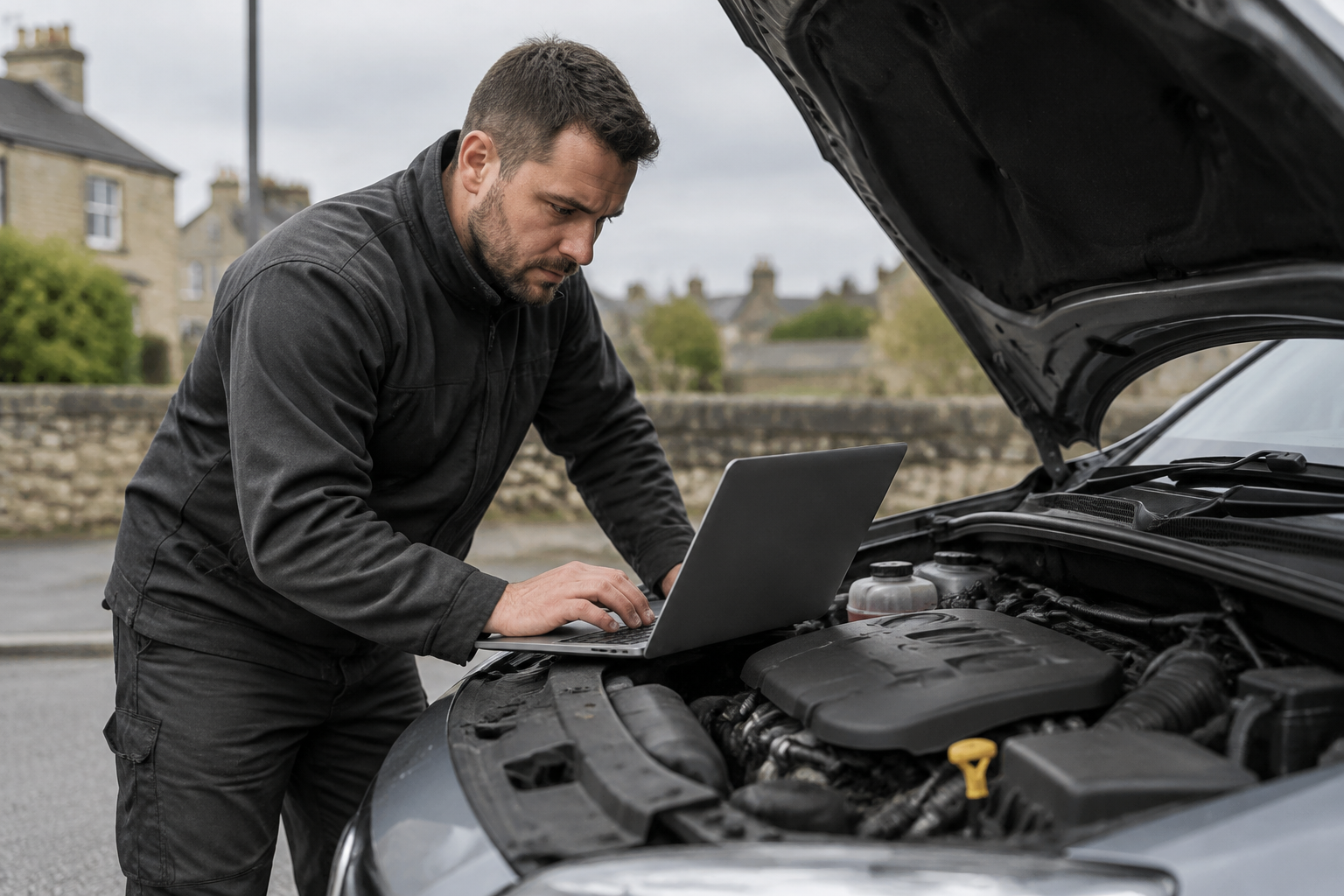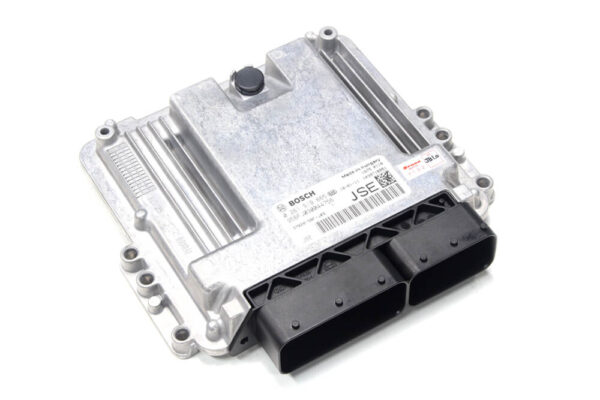
A torque limiter is ECU software that restricts how much engine torque can be requested or delivered under particular conditions. In an ECU remap, selected torque limits may be recalibrated to change delivery, but thermal, drivetrain and other essential protections should remain functional. The right approach depends on the vehicle’s condition, transmission and intended use—not just a peak Nm figure.
How does an ECU torque limiter work?
In many modern torque-based engine-management systems, the accelerator pedal does not directly command a fixed amount of fuel or throttle opening. Instead, driver demand becomes a torque request. The ECU compares that request with active limits, then calculates the airflow, boost, fuelling and, where relevant, ignition commands needed to deliver the permitted torque.
- The driver presses the accelerator, creating a demand for torque.
- The ECU compares that demand with applicable torque and protection limits.
- It commands the engine controls needed to deliver the allowed torque.
- It reduces torque if an engine, traction or transmission strategy requires intervention.
A torque limiter is therefore not a physical component or necessarily one map. Depending on the vehicle, several software tables and control strategies can constrain torque at different times. Traction control or a transmission controller may also request a reduction. Exact strategies vary by platform: diesel engines commonly manage torque through fuel quantity alongside airflow and boost, while petrol engines balance load, boost and ignition.
Why does a vehicle have more than one torque limit?
Engine and drivetrain demands change with RPM, gear, temperature, load and environmental conditions. Factory calibrations can use overlapping limits to manage those changes.
| Limit type | When it may apply | Why it matters |
|---|---|---|
| Engine-speed | At particular RPM points | Shapes torque delivery through the rev range. |
| Gear-dependent | In selected gears, where supported | Can manage wheelspin and drivetrain shock loading. |
| Thermal | When relevant temperatures rise | Helps protect engine and exhaust components. |
| Ambient-pressure | When atmospheric pressure falls, including at altitude | Helps keep operation appropriate for the conditions. |
| Transmission | During shifts or other protected operating conditions | Supports gearbox and clutch operation. |
For example, some vehicles limit torque more firmly in lower gears to make acceleration controllable and reduce sudden loads on the clutch, driveshafts, differential and gearbox. Not every vehicle uses a gear-specific limiter, and maximum torque in every gear is not automatically the best road-use target.
How does an ECU remap change torque delivery?
A responsible remap recalibrates relevant requests and limits within the vehicle’s torque-control strategy. It should not simply remove every limiter or disable thermal and component protections.
The shape of the torque curve matters as much as its peak. A progressive increase can feel smooth and predictable, whereas a sharp surge at very low RPM can place heavy load on the drivetrain. Hard acceleration in a high gear at low engine speed may also expose clutch slip, driveline shudder or dual-mass flywheel (DMF) weakness. A calibration cannot repair worn components.
Torque calculations must remain credible. If a calibration reports misleading torque values instead of properly recalibrating the model, connected systems may receive inaccurate information. Depending on the platform, that can affect plausibility monitoring, stability-control intervention or transmission shift and pressure calculations.
What changes on an automatic or dual-clutch vehicle?
On many automatic and dual-clutch vehicles, the engine ECU and transmission controller exchange torque information. The transmission may set a limit or request a temporary reduction, particularly during a gear change or to protect its clutches. The engine can respond through boost, ignition or fuelling control, depending on its design.
This does not mean every automatic vehicle needs transmission software changes. The standard strategy may be suitable on one platform while another requires vehicle-specific consideration. For more detail, read Can an ECU Remap Affect an Automatic Gearbox?
Why do clutch, gearbox and DMF condition matter?
Software limits cannot diagnose mechanical condition or guarantee hardware capacity. An already worn or contaminated clutch may slip after a torque increase; a tired DMF may shudder more noticeably under load. Gearbox condition, maintenance history, vehicle load and driving style also affect the outcome.
A torque increase may reveal an existing weakness, but it does not prove calibration caused every later fault. Likewise, a remap cannot compensate for pre-existing wear. Mention clutch slip, vibration, rattles, warning lights, boost concerns or poor running before booking. See the guide to clutch and dual-mass flywheel checks before a Stage 1 remap.
Is a quoted torque figure a safe limit for every vehicle?
No. A quoted Nm figure is an output estimate, not a guarantee that every clutch, gearbox or flywheel can handle it. Component specification, age, condition, servicing, temperature, load and the way torque builds through the rev range all matter. A regularly loaded van and a lightly used car may need different considerations even if their advertised peak figures are similar.
The more useful question is: where and how quickly will the additional torque arrive, and is that suitable for this vehicle’s condition and normal use?
What should you ask before a remap?
Before arranging Stage 1 or Stage 2 work, discuss the proposed calibration and the vehicle’s health. Useful questions include:
- Where will the extra torque arrive? Ask about the low-RPM response and whether delivery is intended to build progressively.
- What needs checking first? Report any slip, vibration, rattles, warning lights or running issues rather than expecting a remap to cure them.
- Which protections remain active? Ask about thermal, atmospheric-pressure, plausibility and relevant transmission controls.
- How does the vehicle’s use affect the approach? Towing, carrying weight and an ageing clutch can matter more than a headline figure.
- How is the transmission strategy considered? On an automatic or dual-clutch vehicle, ask how the engine calibration will work with it.
A pre-booking vehicle health check and an understanding of how diagnostic checks support remapping can help set realistic expectations.
Frequently Asked Questions
Is a torque limiter a physical part?
No. It is software logic within the ECU’s control strategy, not a separate component under the bonnet.
Does remapping remove the torque limiter?
Not necessarily. A remap may recalibrate selected torque requests and limits. Critical protection strategies should continue to work when needed.
Can a higher torque limit damage a clutch or gearbox?
Additional torque can increase load and expose existing wear. Risk depends on how torque is delivered, the vehicle’s mechanical condition and its use; no single Nm figure guarantees safety.
Do automatic cars always need a transmission remap?
No. Whether transmission software changes are appropriate depends on the specific platform and proposed engine calibration.
Swansea Remaps provides fully mobile Stage 1 and Stage 2 ECU remapping and ECU diagnostics across Swansea and surrounding South Wales, including Neath, Port Talbot, Llanelli, Gorseinon, Morriston, Mumbles, Pontarddulais and Ammanford. Learn more about ECU remapping. The service does not include a dyno facility, so vehicle-specific torque figures should not be treated as guaranteed outcomes.
Results, compatibility and suitable options vary by vehicle, software version, mechanical condition and existing modifications. Always confirm the correct route for your own vehicle before work is carried out.