For battery warning light while driving diagnostics, treat the red battery symbol as a charging-system warning first, not automatic proof that the battery itself needs replacing. It usually means the alternator, its drive belt, wiring, fuse, earth connection or charging-control system is no longer supplying sufficient power while the engine runs. Pull over safely as soon as practical, reduce non-essential electrical loads where safe, and avoid relying on a predicted number of miles or minutes before the vehicle stops.
Safety callout: if the battery light appears alongside a rising temperature gauge, steam from the bonnet, unusual belt noise, suddenly heavy steering, dimming headlights, or several warning lights at once, find somewhere safe to stop as soon as it is practical to do so. Do not continue on the assumption that a battery swap will resolve it.
At a glance: what the red battery symbol usually means
The battery-shaped warning light is designed to indicate a charging-system fault — a voltage deficit or a failure of the alternator to generate power — rather than purely reporting that the 12V battery is old or discharged. Possible causes include the alternator, wiring and alternator drive belt.
A severely damaged internal battery cell can, in rare cases, disrupt system voltage enough to trigger the same warning, so the battery is not ruled out entirely. It simply should not be assumed as the default cause. In practical terms, the light usually means the car is no longer being recharged while it runs and is relying on whatever charge remains stored.
What to do immediately while driving
Once the light appears, the car is effectively running on residual battery capacity rather than continuous charging. There is no reliable way to predict how long that reserve will last — it depends heavily on what electrical loads are active (headlights, heater blower, heated screen, electric power steering), the state of charge of the battery beforehand, and the specific vehicle's electrical design. Resist any temptation to estimate a safe number of miles or minutes before continuing; reserve duration varies too much to generalise safely.
A sensible approach is to reduce non-essential electrical demand where it is safe to do so (for example, turning off heated seats, rear screen heaters, or infotainment) and to find somewhere safe to stop as soon as reasonably possible, rather than pressing on toward a distant destination. Left unresolved, the vehicle's electronics — ignition, injectors, fuel pump, ECU — will continue drawing on the battery until it can no longer sustain them, at which point the engine can stall and the car loses electrical function, sometimes without much warning.
The auxiliary-belt and water-pump trap
One reason this warning deserves prompt attention is that, on many engines, the auxiliary (serpentine) belt drives both the alternator and the mechanical coolant pump. If that belt has snapped or come off, you lose charging and coolant circulation at the same time. Without circulation, engine temperature can climb very quickly, and in a worst case this can lead to serious overheating damage within a short period of driving.
This is vehicle-dependent — some engines use an electrically driven water pump or a pump driven by the timing belt or chain rather than the auxiliary belt — so it should not be treated as a universal rule. But because you cannot always tell from the driver's seat which arrangement your vehicle has, it is a sound reason to treat a battery warning light as a prompt to stop safely rather than to keep driving and assess later.
Safe checks drivers can make — and the test never to perform
Stop-now decision: stop safely and switch off the engine if the temperature rises, steam is present, the auxiliary belt is missing, or the vehicle becomes unsafe to drive. Do not restart it to investigate. Recovery or suitable mechanical assistance is the appropriate next step, rather than arranging a mobile diagnostic visit for an unsafe vehicle.
Once you are safely stopped with the engine switched off, there are some low-risk observations worth making:
- Check whether any other warning lights are illuminated alongside the battery symbol.
- Note whether the temperature gauge rose, or whether you noticed unusual belt noise, a burning smell, dimming lights or a sudden change in steering effort before stopping.
- With the bonnet open and the engine off, look for an obviously missing, slack or visibly damaged auxiliary belt.
- Look for obviously loose or corroded battery terminals, damaged cables or a loose earth strap, without disturbing connections.
These are observations rather than a diagnosis. If the temperature is rising, there is steam, or the belt is missing, do not restart the engine simply to investigate further. On vehicles where the auxiliary belt also drives the coolant pump, a belt failure can stop coolant circulation as well as charging.
Never disconnect a battery terminal while the engine is running to “test” the alternator. This obsolete test can create a damaging voltage spike on a modern vehicle, potentially harming ECUs, sensors and other electronic components.
Why replacing the battery may not fix the warning
A diagnostic process for a battery warning light that appears while driving should begin with the charging system, not with an automatic battery purchase. Possible causes include a failed alternator or alternator pulley, a slipping or broken auxiliary belt, a blown fuse, high resistance in a positive cable, a poor engine or gearbox earth, damaged connectors, or wiring faults.
The battery itself still needs assessing, particularly if it is damaged or unable to hold charge, but replacing an AGM or EFB battery will not repair a belt, cable, earth or alternator fault. On newer vehicles, the battery monitoring system may also be part of the fault path. An Intelligent Battery Sensor (IBS) or BMS sensor, often fitted around the negative terminal, can report incorrect information or lose communication with the vehicle network.
Smart alternators: why a low voltage reading is not a verdict
Many modern vehicles use smart charging rather than an alternator that constantly holds approximately 14.4V. Depending on the vehicle, the ECU can vary charging voltage according to battery state of charge, electrical load and driving conditions, with communication sometimes managed through a LIN network.
For that reason, a multimeter reading below 13.5V at idle does not, by itself, prove that the alternator has failed. The important question is whether the measured system voltage and alternator behaviour match the vehicle’s commanded charging strategy. A LIN communication issue or battery-sensor fault may produce charging warnings without identifying the alternator itself as the failed part. Vehicle-specific diagnostic information should be considered alongside electrical checks.
What proper ECU diagnostics can establish
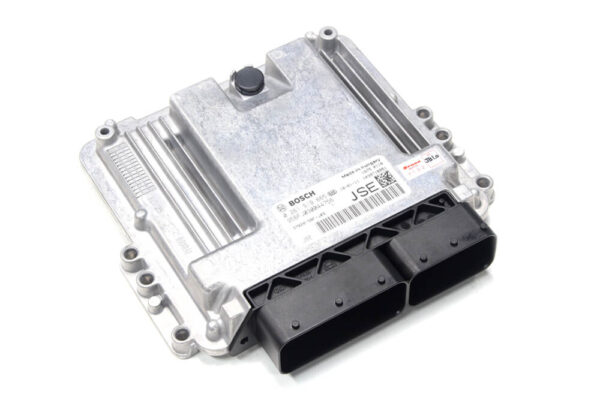
A proper investigation combines electrical checks with diagnostic data. Where the vehicle supports it, this can include scanning relevant modules for charging and network fault codes, reviewing live charging data and commanded values, and assessing battery-sensor and LIN communication status.
A fault code is a useful clue, not an automatic parts list. Manufacturer-specific codes, charging strategies and network layouts vary, so the aim is to identify the likely fault circuit or component before replacing parts. Belt-drive inspection, voltage-drop testing, and checks of fuses, cables, connectors and earths form part of the wider diagnostic and repair pathway where indicated; ECU diagnostics do not replace mechanical repair or specialist electrical testing.
For drivers in Swansea and surrounding South Wales, Swansea Remaps' mobile ECU diagnostics can support fault investigation where the vehicle can be assessed safely at an agreed location. Further information on interpreting warning-related faults is available through its DTC solutions service page.
Why charging health must be resolved before an ECU remap
An active charging-system fault or unstable battery must be diagnosed and resolved before ECU programming. Stable electrical voltage is essential while an ECU is being read, erased or written; a voltage drop can interrupt the write, corrupt data or leave an ECU inoperative.
This is why charging health should be confirmed before any Stage 1 or Stage 2 work. See Can a Weak Car Battery Affect an ECU Remap? and What Happens If an ECU Remap Is Interrupted? for more context. If you need mobile diagnostic support in Swansea, Neath, Port Talbot, Llanelli or the surrounding area, contact Swansea Remaps to discuss the warning and the diagnostic information required. This is fault investigation, not recovery or a substitute for mechanical attention where there is overheating, steam, a missing belt or unsafe drivability.
Sources & further reading
External references used to support factual points in this guide.
Results, compatibility and suitable options vary by vehicle, software version, mechanical condition and existing modifications. Always confirm the correct route for your own vehicle before work is carried out.