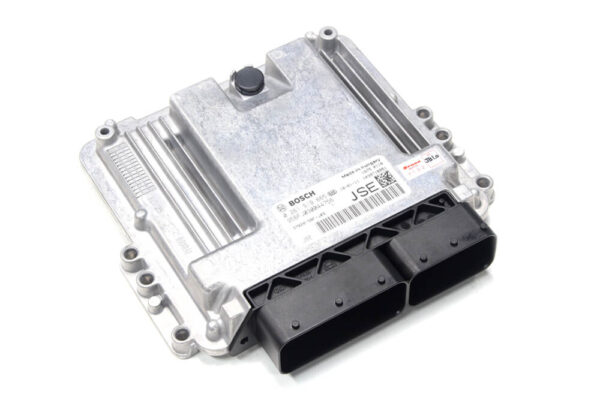
Use the fuel grade specified by your vehicle's original handbook or filler-cap label, then follow the exact calibration advice given by whoever wrote your Stage 1 file. A petrol Stage 1 remap can be written for standard 95 RON unleaded or optimised specifically around 97–99 RON Super Unleaded — there is no universal rule that every remapped car must run premium fuel. If your calibration specifically targets 99 RON, running 95 RON can cause the ECU to pull ignition timing, reducing the performance the map was designed to deliver. If your calibration was built around 95 RON, filling up with 99 RON adds a knock safety margin but won't automatically create extra power on its own.
The short answer: there is no single fuel rule after a Stage 1 remap
One of the most persistent myths among remapped petrol owners is that every Stage 1 car must run 99 RON fuel. The opposite assumption—that 95 RON is always fine because the car ran it before—is no more reliable. The right answer comes from two vehicle-specific checks: the manufacturer’s original minimum fuel requirement and the RON grade for which the ECU calibration was written.
A Stage 1 calibration can be developed around standard 95 RON petrol, or it can be optimised for 97–99 RON Super Unleaded. If a car already has a factory requirement for higher-octane fuel, that baseline still applies after remapping. A remap cannot make it appropriate to use a fuel grade below the manufacturer’s minimum requirement.
That is why pump labels, a forum thread and another owner’s experience are not enough to choose fuel for your own car. They cannot tell you the specification of the file installed on your ECU.
95 RON, 97 RON and 99 RON: what the numbers mean
RON means Research Octane Number. In the UK, ordinary unleaded is generally 95 RON, while Super Unleaded is commonly sold at 97–99 RON. The important distinction is not that a higher-RON fuel contains more energy or automatically makes more power. Its key property is greater resistance to uncontrolled auto-ignition under heat and pressure.
Petrol in a healthy engine should burn in a controlled flame front after the spark plug fires. Under high load, boost or compression, lower-octane fuel can be more prone to uncontrolled combustion, commonly called knock or detonation. Higher-RON fuel gives the calibration more knock resistance, which can allow suitable engines to run the intended ignition timing without intervention.
Do not treat the E5 or E10 marking as a substitute for checking octane. Fuel compatibility matters, but for a Stage 1 fuel question the crucial information is the minimum RON specified by the vehicle and the target RON of the calibration.
Why a Stage 1 calibration can change the fuel recommendation
A Stage 1 remap is not one fixed recipe. Depending on the vehicle and the intended fuel, a calibration may alter ignition timing, fuelling and, on applicable turbocharged engines, boost control. A file designed to take advantage of 97–99 RON can use a different ignition strategy from one designed for everyday 95 RON use.
Think of octane in two related ways:
- Knock margin is the extra resistance to knock available when cylinder temperature and pressure rise.
- Ignition advance is the timing strategy used to extract the torque and response intended by the calibration.
More octane can provide more knock margin, but it only creates additional performance where the ECU has adaptation or calibration headroom to use it. Filling a car mapped solely for 95 RON with 99 RON does not automatically rewrite its ignition targets. Equally, filling a 99 RON-specific calibration with 95 RON does not turn it into a proper 95 RON map.
What knock control does when the fuel is lower octane than expected
Modern petrol ECUs commonly use knock sensors to listen for combustion instability. When the ECU detects knock, it can retard ignition timing to reduce cylinder pressure and help protect the engine. This is a valuable safety response, especially if the wrong fuel has been used accidentally.
However, knock control is not a licence to use an unsuitable grade indefinitely. If a calibration expects 99 RON but repeatedly encounters 95 RON under load, timing correction can reduce torque and response. Persistent correction also works against the calibration’s intended operating conditions and can increase thermal stress. The sensible response is to return to the fuel grade specified for that calibration, rather than relying on the ECU to compensate every time.
An accidental fill of lower-octane petrol is not a reason to assume immediate engine damage. Avoid sustained heavy load where possible, check the tuner’s advice for the vehicle, and use the correct fuel at the next opportunity. The exact response varies by engine and ECU, so there is no universal correction threshold or one-size-fits-all instruction.
What happens in the two common fuel scenarios
Scenario 1: 95 RON in a calibration specifically intended for 99 RON. Under load, the ECU may detect knock activity and pull ignition timing. The likely result is reduced torque and power delivery versus the intended calibration target, with less consistent response. It does not mean that one tank will automatically cause a failure, but it is not the fuel the map was designed to use.
Scenario 2: 99 RON in a calibration designed for 95 RON. The higher-octane fuel can provide additional knock margin. It will not, by itself, guarantee extra peak power. Unless the ECU can adapt timing or the calibration was made to exploit the higher RON, the engine may simply continue to meet the targets already set for 95 RON.
These scenarios are why claims such as “always use Super” or “premium fuel always adds horsepower” are too broad. Calibration target comes first.
How to find the correct fuel for your own car
- Check the fuel-filler flap or cap. Look for the manufacturer’s stated minimum or recommended RON rating.
- Check the handbook. Confirm the factory requirement for the exact engine, rather than relying on a similar model or an online comment.
- Ask the tuner which fuel the proposed or installed calibration targets. Be specific: ask whether it is written for 95 RON or for 97–99 RON Super Unleaded.
- Use the answer consistently. If you normally cannot obtain the required grade, discuss that before remapping rather than changing fuel based solely on forum advice.
Before making an enquiry, it can also help to use the vehicle lookup to identify the relevant vehicle details. Supplying the exact registration, engine and the fuel grade you can reliably buy gives the tuner the information needed to discuss an appropriate Stage 1 option.
Frequently asked questions
Does every petrol Stage 1 remap need Super Unleaded?
No. Some calibrations can be written for 95 RON, while others are optimised for 97–99 RON. The factory requirement and the specific calibration decide the answer.
Can a Stage 1 map be written for 95 RON?
It can be, where that is appropriate for the vehicle and provided it does not conflict with the manufacturer’s minimum fuel requirement. Confirm the intended fuel before the work is carried out.
Will 99 RON automatically make a 95 RON map more powerful?
No. It can add knock margin, but extra power requires an ECU strategy that can use the additional octane. Higher RON is not an automatic power upgrade.
What if I accidentally put 95 RON in a car mapped for 99 RON?
The ECU may retard timing if it detects knock, which can reduce performance. Avoid treating that protection as a permanent solution, follow the tuner’s vehicle-specific guidance, and return to the correct fuel grade as soon as practical.
Can I use forum advice to choose a fuel grade?
Use forums only as a prompt for questions. Another owner may have a different engine version, factory fuel requirement or calibration. The handbook, filler-cap information and the tuner’s advice are the relevant sources for your car.
Before booking a petrol Stage 1 remap
Fuel choice is one part of a sensible pre-booking conversation. Provide accurate vehicle details, state the RON grade you normally have access to and ask what the proposed calibration requires. It is also wise to resolve existing warning lights, running concerns or engine-management faults before tuning. Our guide to whether your car is ready for a Stage 1 remap explains the checks worth considering first.
Swansea Remaps provides mobile Stage 1 ECU remapping and ECU diagnostic support across Swansea and surrounding South Wales. For a useful first enquiry, send the information outlined in what to send before a mobile ECU remap. If there is an existing fault or concern, read how diagnostic checks support remapping results before arranging the work.
Sources & further reading
External references used to support factual points in this guide.
- uk-car-discount.co.uk
- wikipedia.org
- seatcupra.net
- Is Premium Fuel Worth It? Petrol and Diesel Explained
- The Difference Between E5 and E10 Petrol
- Is it worth using higher grade petrol?
- Supermarket petrol quality: what you need to know - Which.co.uk
- Super Unleaded vs Unleaded Petrol: Differences, RON, E5 & Which Fuel UK
- What RON petrol does my car need? - Route & Fuel UK
- Shell V-Power
- UK Fuel Types: What Should You Use? - Blog - Direct Cars
- What is the best fuel for my car? A guide
- 2021 United Kingdom fuel supply crisis
Results, compatibility and suitable options vary by vehicle, software version, mechanical condition and existing modifications. Always confirm the correct route for your own vehicle before work is carried out.