A warning light appearing just as you set off for work, load the van or head out on a long run is never ideal. This guide to engine management lights explains what the light is actually telling you, how urgently you need to act, and why a proper diagnostic check beats guessing or replacing parts at random.
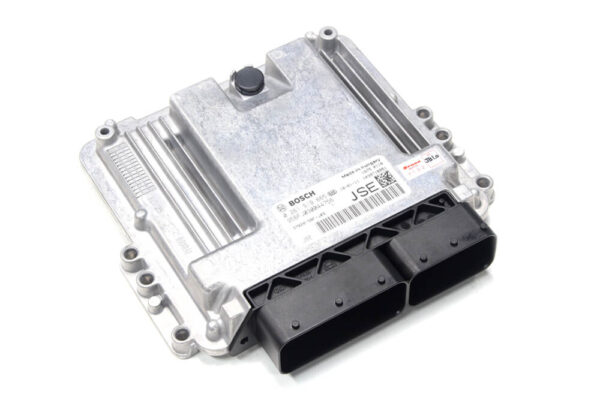
The engine management light is connected to your vehicle’s ECU. When the ECU sees a reading outside its expected range, or detects a fault that could affect emissions, performance or reliability, it stores a fault code and brings up the warning light. That does not automatically mean major engine damage. It does mean the vehicle needs attention.
What does an engine management light look like?
Most vehicles show an amber engine-shaped symbol on the dashboard. Depending on the make and model, it may also appear alongside a message such as “check engine”, “emissions fault”, “engine fault” or “anti-pollution system fault”.
The colour and behaviour of the light matter. An amber light usually means a fault has been recorded and the vehicle may still be driven carefully for a short period. A red warning, or a flashing engine management light, is more serious. Reduce load immediately, avoid hard acceleration and arrange professional assistance rather than trying to drive through it.
A flashing light can indicate an active misfire. Unburnt fuel may then enter the exhaust and overheat the catalytic converter, turning a manageable ignition fault into a far more costly repair. If the engine is shaking, lacking power badly, smoking or making unusual noises, stop when it is safe to do so.
A practical guide to engine management lights
The key question is not simply whether the light is on. It is whether the car or van is driving normally, and whether the fault is intermittent or constant.
If the amber light is steady and the vehicle feels normal, check obvious basics first. Make sure the fuel cap is secure, check oil and coolant levels when the engine is cold, and take note of any recent changes such as poor fuel economy, rough starting or a new hesitation under load. Do not clear the warning without reading the fault codes first. Clearing codes can remove useful evidence while doing nothing to fix the cause.
If the vehicle has gone into limp mode, the ECU has deliberately limited power to protect the engine, turbocharger or emissions system. This is common with boost control, DPF, EGR, AdBlue and sensor-related faults. You may be able to move the vehicle safely, but it is not a fault to ignore, especially on a working van where repeated short trips and heavy loads can make the issue worse.
When the light is flashing, the engine runs roughly, or another red warning is present, do not continue driving unless there is no safe alternative. Recovery is often the sensible option.
Why fault codes are only the starting point
A diagnostic scanner can retrieve stored and pending fault codes from the ECU. These codes point a technician towards the system reporting the problem, but they are not a guaranteed list of failed parts.
For example, a boost pressure code does not always mean the turbo has failed. It could relate to a split boost hose, vacuum leak, sticking actuator, faulty pressure sensor, wiring issue or a control fault. Equally, a DPF-related code may be caused by excessive soot loading, but it can also be the result of a failed temperature sensor, differential pressure sensor, incomplete regeneration or another engine fault creating too much soot.
This is why workshop-grade diagnostics matter. A proper investigation checks live data, expected readings, related codes and the way the vehicle behaves under the conditions that caused the warning. Replacing the part named in a generic code description can be expensive guesswork.
Common causes of an engine management warning
Modern engines rely on a large number of sensors and controlled systems. The most common causes vary by vehicle, mileage and how it is used, but several faults appear regularly.
Ignition problems are common on petrol vehicles. A worn spark plug, failing coil pack or injector issue can cause a misfire, rough idle and flashing warning light. On diesel vehicles, air-flow, fuel-pressure and boost-control faults are more frequent causes of lost power and an amber light.
Emissions systems are another major source of warnings. DPF faults are especially common where a diesel mainly covers short journeys, never reaching the temperatures needed for a full regeneration. EGR valves can become restricted by carbon deposits, affecting air flow and drivability. AdBlue and NOx sensor faults can trigger countdown warnings on newer diesels, eventually preventing a restart if left unresolved.
Other regular causes include oxygen sensor faults, intake leaks, faulty coolant temperature sensors, throttle body issues and wiring damage. A rodent-damaged wire or corroded connector can produce the same dashboard warning as a failed component, which is another reason not to assume the worst.
Can you keep driving with the light on?
It depends on the warning and the symptoms. A steady amber engine management light with no loss of power or abnormal running may allow a careful journey to a diagnostic appointment. Keep revs moderate, avoid towing, avoid sustained high-speed driving and do not put the vehicle under unnecessary load.
That said, delaying diagnosis can create secondary problems. An engine running rich can damage the catalytic converter. A persistent DPF issue can lead to increased soot loading. A boost leak can make a turbo work harder than it should. For tradespeople and fleet operators, a small warning ignored today can turn into vehicle downtime at exactly the wrong moment.
If the light disappears after a few journeys, do not assume the issue has fixed itself. Intermittent faults are often stored as pending codes and can return under load, in cold weather or during a motorway run. Getting the codes read while the evidence is still there is the smarter move.
What to expect from proper diagnostics
A useful diagnostic session should do more than plug in a reader and repeat a code description. The vehicle should be assessed in context: its mileage, service history, recent repairs, use pattern and reported symptoms all matter.
A technician may inspect hoses, connectors, vacuum lines and visible wiring before testing live ECU values. Where appropriate, this can include checking boost request against actual boost, air-mass readings, injector corrections, exhaust temperatures, DPF soot load and regeneration history. The aim is to identify the root cause, not just switch the warning light off.
For vehicles with recurring engine-management faults, ECU calibration should also be considered carefully. A quality remap is not a substitute for repairing a mechanical or sensor fault. The vehicle needs to be healthy first. Once it is, professionally developed software can improve torque delivery, throttle response and, on suitable vehicles, fuel economy. It must be matched to the vehicle’s condition and intended use, not treated as a quick fix for an unresolved warning light.
Avoid the usual costly mistakes
The biggest mistake is continuing to drive a poorly running vehicle because it still moves. The second is fitting parts based solely on an internet code lookup. Generic scanners are useful for an initial indication, but they rarely provide the full manufacturer-level data needed for a confident diagnosis.
Be cautious with additives and forced regeneration attempts too. They have a place in the right circumstances, but they cannot repair a broken sensor, an air leak or an underlying combustion issue. For emissions-related faults, any modification must also be suitable for the vehicle’s use and comply with applicable road-use and emissions rules. Off-road-only solutions are exactly that: for off-road use only.
If you are in Swansea or the surrounding area and the warning keeps returning, Swansea Remaps can assess the stored faults using up-to-date diagnostic equipment before recommending the right route forward. A clear diagnosis gives you a far better chance of fixing the issue once, protecting performance and keeping your vehicle dependable when you need it most.
A dashboard light is best treated as an early warning, not an invitation to panic. Record the symptoms, act quickly when the vehicle feels wrong, and get proper data behind the decision before spending money on parts.
Results, compatibility and suitable options vary by vehicle, software version, mechanical condition and existing modifications. Always confirm the correct route for your own vehicle before work is carried out.