Guidance checked: 5 September 2026.
A transparent ECU remap should leave a traceable record of the vehicle and ECU involved, their diagnostic status before programming, the agreed calibration, completion of the write and the checks made afterwards. It should also identify anything that was not tested or remains unresolved.
This record is evidence of what was found and completed. It is not automatic proof of increased power, mechanical health, emissions compliance, long-term reliability or future fault-free running.
The checklist below is a consumer transparency framework rather than an official DVSA form, legal requirement or universal remapping standard. Available identifiers and diagnostic information vary between vehicles, ECUs and tools.
The four types of post-remap evidence
A completed software write, a clear dashboard and a test drive are not interchangeable forms of evidence. Each supports a different conclusion:
| Record type | Examples | What it supports | What it does not prove |
|---|---|---|---|
| Programming record | Job reference, ECU reference, calibration version and confirmation that the programming session completed | Which recorded job and calibration were linked to the vehicle | Power, torque, reliability or mechanical condition |
| Post-write diagnostics | Repeat fault-code scan and warning-light status | Diagnostic status at that point in time | That every component is healthy or no fault will develop later |
| Operational observation | Starting, idling, dashboard checks and a safe, lawful road-verification outcome if actually performed | What was observed during those limited checks | Peak output, fuel economy, emissions compliance or durability |
| Measured output | Instrumented power and torque measurement | Measured output under the stated test conditions | Future reliability or compliance in every operating condition |
Swansea Remaps is a fully mobile service and does not provide dyno testing. Its mobile Stage 1 and Stage 2 services should therefore not be confused with a before-and-after dyno assessment or power-chart service.
The eight-part Remap Record checklist
Ask a provider which of the following details will be recorded where they are available and applicable:
- Vehicle and ECU identity
- Declared condition, modifications and requested scope
- Pre-write diagnostic findings
- Original ECU read or baseline reference
- Agreed calibration and programming record
- Post-write verification
- Customer handover, limitations and follow-up
- Insurance, roadworthiness and compliance reminders
1. Vehicle and ECU identity
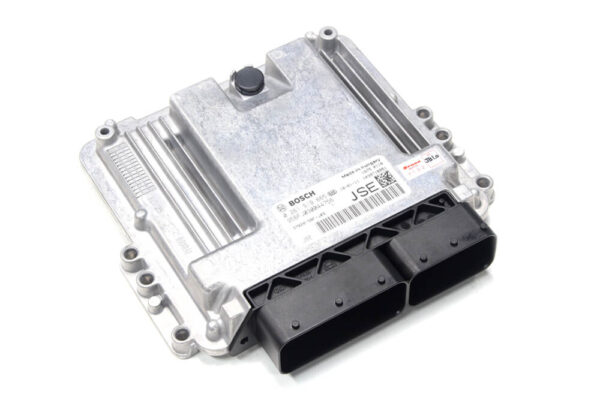
A registration number is useful, but it is not a complete technical identity record. The record should link the job to the correct vehicle and, where the workflow exposes the information, the correct control unit.
Useful fields to record
- Registration number and VIN
- Make, model and engine description where known
- Recorded mileage
- Customer or job reference
- ECU hardware identifier where available
- ECU software or calibration identifier where available
- Any relevant indication that the ECU has been replaced or previously changed, if known
Why keep it? Closely related vehicle variants can use different software or hardware. Identity records also provide context if the vehicle later receives a replacement ECU, manufacturer update or further modification.
These details should be handled as private job information. Customer VINs, ECU serial information and raw ECU files should not be published as supposed proof of work.
2. Declared condition, modifications and requested scope
The vehicle owner and provider should establish what is being requested before programming begins. The record should distinguish customer declarations from conditions independently observed during the appointment.
Record where relevant
- Existing warning lights and reported symptoms
- Known previous ECU work or manufacturer software updates
- Relevant engine, intake, exhaust or transmission hardware changes
- The requested Stage 1 or Stage 2 service category
- Any limitations or exclusions discussed before proceeding
- Whether further diagnosis or repair has been recommended
Owners considering Stage 1 can use this pre-booking health-check guide. A Stage 2 request needs a particularly clear hardware record; see the Stage 2 hardware checklist.
Recording a reported condition does not confirm that the vehicle is mechanically sound. Nor should a remap be presented as a repair for an unrelated defect.
A legitimate road-use scope should not include disabling, removing, masking or reducing the effectiveness of required DPF, EGR, SCR/AdBlue, catalyst, NOx or OBD-related controls. Suspected emissions-system faults require diagnosis and lawful repair or regeneration where appropriate.
3. Pre-write diagnostic status
A saved pre-write diagnostic report creates a time-stamped baseline before software is changed. Where supported by the vehicle and diagnostic equipment, it can record:
- Stored, pending and permanent diagnostic trouble codes
- Freeze-frame information associated with relevant faults
- Readiness information where available
- Engine-management and other relevant dashboard warning-light status
- Relevant diagnostic observations made during the assessment
Not every platform reports all these categories. A code also needs interpretation: its presence does not automatically mean a vehicle is unsafe, will fail an MOT or can never be remapped.
However, warning lights should not be dismissed simply because the vehicle appears to drive normally. Under the current DVSA MOT inspection manual, the engine malfunction indicator lamp and emissions-related equipment can be relevant to an MOT assessment. An illuminated lamp can matter independently of a tailpipe result.
For more context, read whether a car should be remapped with an engine-management light on or learn about ECU diagnostics.
Stop and refer: reasons not to rush into programming
A responsible record may show that work proceeded with stated limitations, was deferred for diagnosis or repair, or was declined. Postponement can be a sign of sensible process control rather than poor service.
Reasons to pause and investigate can include:
- Active, relevant warning lights or faults
- Sensor information that appears implausible
- Low or unstable system voltage
- A mismatch between vehicle and ECU identity
- Unclear previous ECU or calibration history
- Missing information about relevant hardware modifications
- A request involving defeat of road-use emissions controls
The decision and agreed next step should be written down. Government guidance on the Consumer Rights Act 2015 explains that consumer services must be performed with reasonable care and skill, and that relied-upon information about a service can become binding. Clear scope and findings help prevent confusion about what was and was not undertaken.
A diagnostic assessment remains a snapshot, not a comprehensive mechanical health certificate for the engine, turbocharger, clutch, gearbox, fuel system, battery or emissions equipment.
4. ECU software baseline and original-read reference
Where a safe and supported original ECU read is available, it should be logged as the software baseline. A useful record may include:
- A unique filename or non-sensitive reference
- Capture date and time
- Linked vehicle and ECU identifiers
- The broad read method or tool category
- Where or how the file is controlled
- The provider’s stated retention terms
Ask for the reference and retention terms rather than assuming the raw binary will be supplied. A customer-facing record can provide traceability without exposing proprietary calibration data or security-sensitive vehicle information.
An original file is not an unconditional reversibility promise. Dealer updates, replacement ECUs, later hardware changes, corruption, anti-tamper measures and unrelated faults can all change what is technically possible in future. Do not assume that possession of one baseline file guarantees restoration of every later vehicle state.
5. Agreed calibration and programming record
The post-write record should identify what was delivered without disclosing map tables, security credentials or operational flashing information.
Suitable customer-facing fields
- Job, date and time reference
- Linked vehicle and ECU references
- Agreed Stage 1 or Stage 2 category
- Relevant declared hardware
- Non-sensitive calibration, file-version or job reference
- Programming method category where appropriate
- Recorded confirmation that the programming session completed
A completed session shows that the recorded programming process reached completion. It does not, by itself, establish measured output, mechanical condition or future reliability.
6. Post-write verification
Realistic checks for a mobile remap can be documented without overstating what they prove. The record should say which checks were actually completed rather than relying on a generic tick-box statement.
- A repeat diagnostic scan
- Dashboard and relevant warning-light status
- Start and idle observation
- Any relevant operational observations
- A safe and lawful road-verification outcome, but only if one was actually performed
- Faults or concerns still present at handover
- Checks not undertaken
A limited road verification is not a power test. It cannot establish peak horsepower or torque, guarantee fuel economy, prove emissions compliance in all conditions or predict component life. Where no dyno measurement has taken place, the documentation should not imply that measured before-and-after output exists.
7. Customer handover and follow-up
The final handover should bring the separate records together in plain English. Useful items include:
- Invoice or job reference
- Vehicle and ECU references
- Pre-write and post-write diagnostic reports where supplied
- Calibration or baseline references
- Checks completed and checks not completed
- Open faults, warning lights or limitations
- Recommended diagnosis, repair or follow-up
- Contact details for questions about the recorded work
This evidence can help with later diagnostics, insurer conversations, resale disclosure and discussions about returning to a baseline. It does not necessarily settle an insurance, warranty or consumer dispute on its own.
8. Insurance, roadworthiness and emissions reminders
An ECU remap is a vehicle modification. The Association of British Insurers says motorists must notify their insurer when modifying a car. Contact your insurer in line with your policy and obtain its position; acceptance, cover terms and premium consequences can vary. Our guide explains more about remapping and UK motor insurance.
Current DVLA guidance does not list ECU calibration as a specific V5C update field. It does list changes such as engine, cylinder capacity and fuel type. That should not be turned into a blanket claim that DVLA never needs to be contacted: vehicle changes are fact-specific, so check the current DVLA vehicle-details guidance for the modifications involved.
The keeper remains responsible for the vehicle’s roadworthiness. Under the DVSA MOT manual verified on 5 September 2026, manufacturer-fitted emissions-control equipment that is missing, obviously modified or obviously defective can result in a major defect in the stated circumstances. An MOT pass does not by itself prove that a calibration is lawful, accepted by an insurer or compliant in every real-world operating condition.
Questions to ask a remapping provider
- Will I receive a record of the diagnostic position before and after programming?
- Which vehicle and ECU identifiers will you capture?
- How will pre-existing warning lights, faults and modifications be recorded?
- What would cause you to defer the remap for diagnosis or repair?
- If an original read is available, what reference and retention terms apply?
- How will the agreed Stage 1 or Stage 2 calibration be identified?
- What checks will you actually perform after programming?
- Will a road verification be carried out, and what can it realistically establish?
- What is excluded from the assessment?
- What documents or references will I receive at handover?
A concise record to keep
Before: vehicle identity, ECU identity, mileage, declared condition, modifications, requested scope, warning lights, diagnostic findings and original-read reference where available.
During: agreed Stage 1 or Stage 2 category, linked calibration or job reference, programming method category and completion status.
After: repeat diagnostic position, dashboard status, start and idle observations, road-verification outcome if performed, unresolved issues, exclusions, follow-up advice and insurance reminder.
Swansea Remaps provides fully mobile Stage 1 and Stage 2 ECU remapping and ECU diagnostics across Swansea and surrounding South Wales. It does not provide a dyno service, so mobile post-write records should never be mistaken for measured power or torque charts.
Sources & further reading
External references used to support factual points in this guide.
- 8. Nuisance
- www.gov.uk
- www.legislation.gov.uk
- www.gov.uk
- mattersoftesting.blog.gov.uk
- www.legislation.gov.uk
- www.legislation.gov.uk
- www.legislation.gov.uk
- www.gov.uk
- www.legislation.gov.uk
- assets.publishing.service.gov.uk
- www.legislation.gov.uk
- eur-lex.europa.eu
- www.legislation.gov.uk
- eur-lex.europa.eu
- www.fordservicecontent.com
- www.gov.uk
- www.gov.uk
- en.wikipedia.org
- www.reddit.com
Results, compatibility and suitable options vary by vehicle, software version, mechanical condition and existing modifications. Always confirm the correct route for your own vehicle before work is carried out.