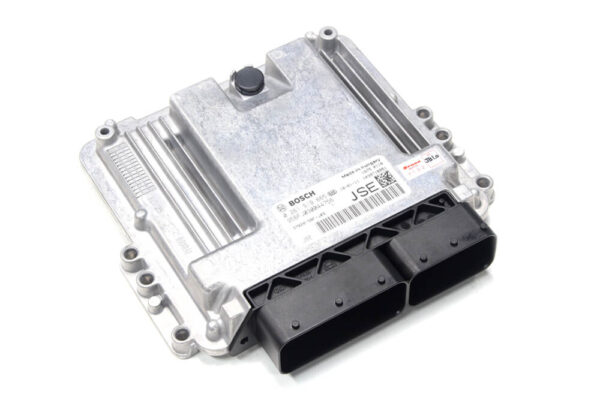
A warning light is not a diagnosis. It is the vehicle telling you that one of its control modules has seen a reading, circuit or operating condition outside its expected range. Knowing how to read fault codes properly can save time, prevent unnecessary parts swapping and help you decide whether a vehicle is safe to keep using.
For car owners, van drivers and fleet operators, the goal is not to memorise every code. It is to understand what the code is reporting, what evidence supports it and what should be tested next. A basic reader can give you a starting point. Proper diagnostics turn that starting point into a reliable repair.
What a fault code actually tells you
Most modern vehicles use onboard diagnostics to monitor engine, emissions, transmission, ABS, airbags and other electronic systems. When a module detects a problem often enough to meet its set conditions, it stores a diagnostic trouble code, commonly called a DTC.
A code identifies the system and the type of issue detected. It does not automatically name the failed component. For example, a code relating to low boost pressure does not prove that the turbocharger has failed. A split boost hose, sticking actuator, vacuum leak, blocked air filter, faulty sensor or wiring issue may all produce a similar result.
That distinction matters. Replacing the part named in a code description can be expensive and may leave the original fault untouched. A good diagnostic process uses the code alongside live data, visual checks, operating conditions and targeted tests.
How to read fault codes from the first letter
A typical OBD fault code looks like P0299. The first letter identifies the main vehicle system involved:
- P means powertrain, covering the engine, gearbox and emissions control systems.
- B means body systems, such as airbags, climate control, central locking or lighting.
- C means chassis systems, including ABS, steering and suspension electronics.
- U means network or communication faults between control modules.
The first number after the letter gives another useful clue. A zero usually indicates a generic SAE code, meaning its core definition is shared across many makes. A one is commonly manufacturer-specific, so the exact description and test procedure can vary between vehicles. The remaining digits narrow down the circuit, sensor, performance condition or system involved.
Take P0401 as an example. It is commonly described as insufficient EGR flow. That does not necessarily mean the EGR valve itself needs replacing. Carbon build-up in the intake, a restricted passage, control fault, wiring problem or inaccurate airflow reading may be the real cause. Read the wording, then investigate the system rather than assuming the first component mentioned is guilty.
Start with the right diagnostic equipment
A simple plug-in code reader can access basic engine codes on many vehicles through the OBD port, usually found beneath the dashboard. It is useful for an initial check, but coverage varies. Cheaper readers may miss manufacturer-specific data, body modules, transmission faults and useful live readings.
A workshop-grade diagnostic tool gives a clearer picture. It can communicate with more modules, read manufacturer codes, show live sensor data, display freeze-frame information and carry out guided tests or actuator checks where supported. That is particularly valuable on modern diesels, where DPF, AdBlue, EGR and boost-related faults can have several linked causes.
Before connecting anything, make sure the battery is in good condition. Low system voltage can create misleading communication codes and a long list of unrelated warnings. If a vehicle has multiple electrical faults after a flat battery, charging and testing the battery should be near the top of the process.
Read the full report before clearing anything
Connect the scanner with the ignition on, identify the vehicle correctly and run a full module scan where the equipment allows it. Do not only check the engine control unit if ABS, airbag, gearbox or communication warnings are present.
Record every stored, pending and permanent code before clearing them. Stored codes have met the criteria for a fault. Pending codes have been seen but may not yet have triggered the warning light. Permanent codes often remain until the vehicle completes its own monitoring checks and confirms that the underlying issue has been repaired.
Also look for the fault status. Current or active codes are present at the time of scanning. Historic or intermittent codes may describe something that happened earlier, such as low voltage, a loose connector or water ingress. An intermittent code still deserves attention, especially if it returns, but it should not be treated in exactly the same way as an active fault.
Use freeze-frame and live data to find the cause
Freeze-frame data is one of the most useful parts of a diagnostic report. It captures a snapshot of vehicle conditions when the fault was set. Depending on the vehicle, this can include engine speed, coolant temperature, vehicle speed, load, fuel pressure, airflow and boost pressure.
If an underboost code occurred at motorway speed under high load, the investigation will differ from one that appeared at idle on a cold start. The same applies to a DPF fault. Soot load, differential pressure readings, exhaust temperatures, journey type and regeneration history are more useful than a code alone.
Live data lets you compare what the ECU is requesting with what the vehicle is delivering. On a turbo diesel, that may mean checking requested boost against actual boost. On a fuel system issue, it may mean comparing rail pressure target and actual pressure. Readings that do not move logically, react too slowly or sit outside expected ranges point the diagnosis in the right direction.
Live data needs context. A single reading at idle rarely proves much. Sensors should be checked under the conditions where the fault occurs, while following safe workshop procedures. This is why a road test, where appropriate, can be as valuable as the scan itself.
Common mistakes when reading car fault codes
The most common mistake is clearing codes immediately to make the warning light disappear. This removes valuable evidence and can make an intermittent fault harder to trace. Record the report first, then clear codes only when you have a reason to do so or after repairs have been completed.
Another mistake is focusing on one code in isolation. A low-voltage fault can trigger faults in several modules. An airflow issue can influence EGR operation, DPF regeneration and boost control. Start with codes that are active, repeatable and likely to be the root cause, rather than chasing every secondary code on the report.
Be cautious with generic internet code descriptions too. They are useful for identifying the system, but they cannot see your vehicle’s live readings, service history or physical condition. Manufacturer-specific codes are especially easy to misread when the scanner uses a vague description.
Finally, do not ignore a warning simply because the vehicle still drives reasonably well. Reduced power, rising fuel use, difficult starting, repeated regeneration attempts or a warning that returns after clearing all point to a fault that needs proper attention. A flashing engine management light, severe loss of power, overheating, brake warnings or airbag warnings should be treated with greater urgency.
When fault-code reading becomes proper diagnosis
A basic reader is ideal for confirming why an engine management light has appeared and for gathering information before booking work. It is less suitable when the fault is intermittent, performance-related, linked to emissions systems or accompanied by multiple dashboard warnings.
This is where a diagnostic workshop earns its keep. The technician can inspect hoses, connectors and wiring, check power and earth supplies, smoke-test intake systems where required, assess measured values and confirm repairs before returning the vehicle. For modified or performance-focused vehicles, accurate diagnostics are equally important: more power only works properly when the engine management system is healthy.
At Swansea Remaps, genuine, up-to-date diagnostic equipment is used to identify the cause behind engine-management issues rather than relying on code descriptions alone. That approach is particularly useful for working vans and daily drivers, where downtime and repeat faults cost more than a careful diagnosis.
A fault code is the beginning, not the verdict
Use the code to identify the system, keep the full report, check the conditions in which it appeared and test before replacing parts. If the evidence does not point clearly to one cause, stop guessing. A properly diagnosed repair keeps the warning light off for the right reason and gives you confidence every time you turn the key.
Results, compatibility and suitable options vary by vehicle, software version, mechanical condition and existing modifications. Always confirm the correct route for your own vehicle before work is carried out.