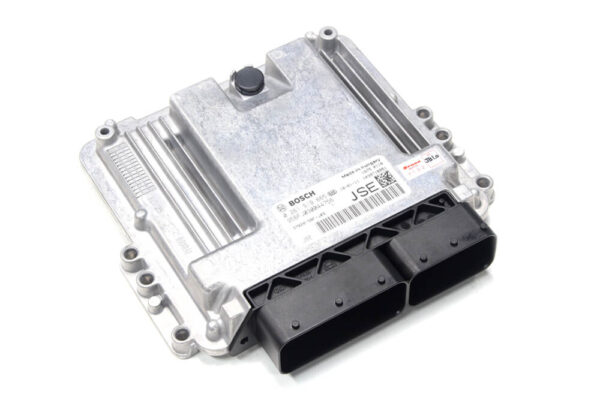
A dashboard message telling you that the engine will not restart in 650 miles is not a warning to ignore until the next service. If you are searching for how to fix AdBlue warnings, the right answer depends on what triggered it: low fluid, poor-quality fluid, crystallisation, a sensor fault or a wider SCR emissions-system problem. Adding more AdBlue can be the fix, but it is not the answer to every warning.
Modern diesel cars and vans use AdBlue as part of the selective catalytic reduction (SCR) system to reduce nitrogen oxide emissions. When the system cannot confirm that it has enough correct fluid or is working as intended, the ECU can apply a restart countdown. Once that countdown reaches zero, the vehicle may crank but will not start until the underlying fault has been rectified and cleared correctly.
Start by Reading the Exact AdBlue Warning
Not all AdBlue messages mean the same thing. The wording, remaining mileage and any accompanying engine management light give a technician a useful starting point.
A message such as “AdBlue level low” or “top up AdBlue” normally means the tank level is genuinely low. In that case, using the correct AdBlue fluid may clear the message after a short drive cycle. Do not expect every vehicle to update the level instantly - some need the ignition cycled, a period of driving or a minimum quantity added before the system recognises it.
A warning that says “AdBlue system fault”, “emissions fault” or “no engine restart possible in X miles” is different. It may be linked to the fluid level, but it can also point to a failed NOx sensor, tank heater, dosing injector, pump, wiring issue or SCR catalyst efficiency fault. Simply filling the tank is unlikely to remove it.
If your vehicle has already reached a no-start message, avoid repeated attempts to start it. Repeated cranking will not override the ECU strategy and may create a flat battery on top of the original issue.
How to Fix AdBlue Warnings Caused by Low Fluid
When the warning is solely a low-level prompt, use fresh, sealed AdBlue that meets ISO 22241 specification. This is not an additive to mix with diesel, and it must only go into the dedicated AdBlue filler neck. On many vehicles this is next to the diesel cap; on others it is under the boot floor, behind a fuel flap or in the engine bay.
Add enough fluid for the vehicle to register the change. A very small top-up can leave the level sensor below its recognition threshold, so the warning remains even though there is technically more fluid in the tank. Check the handbook for the required minimum top-up amount and do not overfill.
Keep the filler area clean. AdBlue dries into white crystals, and contamination from water, diesel or dirt can damage the system. If fluid is spilt on paintwork, rinse it off with water. Never put water into the AdBlue tank to dilute a warning away - it can contaminate the tank, pump and injector, leading to a far more expensive repair.
After topping up, switch the ignition on and allow the vehicle to complete its checks. Then drive it normally. If the low-level warning stays on after the correct quantity has been added and the vehicle has had time to update, it needs fault-code diagnosis rather than more fluid.
When Topping Up Does Not Clear the Warning
Persistent AdBlue warnings are often caused by a component fault rather than a lack of fluid. The SCR system relies on several parts communicating accurately with the ECU. One incorrect reading can trigger an emissions fault and restart countdown.
The most common areas worth checking are:
- AdBlue tank level and quality sensors, which can report an incorrect level or detect contamination.
- NOx sensors, fitted in the exhaust system to measure emissions before and after the SCR catalyst.
- The AdBlue pump and heater, particularly on vehicles that have seen cold weather or repeated short journeys.
- The dosing injector and pipework, where crystallised AdBlue can restrict flow or create a poor spray pattern.
- Wiring, plugs and control modules, where corrosion, damaged wiring or low voltage can cause intermittent faults.
Crystallisation is a regular workshop finding. AdBlue can form deposits around the injector, pipe connections and tank components, especially where there is a leak, poor dosing or long periods of low use. A white crust around the injector area is a clue, but the full system still needs testing before parts are replaced.
A proper diagnostic session reads manufacturer-specific fault codes, freeze-frame data and live readings. That matters because a generic code reader may only show an emissions fault without identifying whether the real cause is a sensor plausibility issue, low pressure in the dosing system or poor NOx conversion.
Do Not Reset a Warning Before Finding the Cause
Clearing fault codes can be useful after a genuine repair, but it is not a repair in itself. If the ECU sees the same fault again during its next self-check, the warning will return - often with less remaining restart mileage.
This is particularly relevant after a low AdBlue level. Some vehicles store a separate fault because the tank was allowed to run too low, and that fault may need clearing after the tank has been filled. Others will reset naturally after a successful drive cycle. The correct route varies by make, model, engine and ECU software.
For vans used on local drops, trade work or frequent stop-start journeys, pay attention to battery condition too. Low voltage can cause misleading sensor and communication faults. A workshop should check battery health and charging voltage alongside the SCR system rather than assuming every code means a failed major component.
Can You Drive With an AdBlue Warning?
It depends on the message. A simple low-level warning with plenty of remaining mileage can usually be dealt with promptly by topping up with the correct fluid. Leaving it until the countdown is nearly exhausted is unnecessary risk, especially if you rely on the vehicle for work.
An AdBlue system fault, engine management light, loss of power or rapidly reducing restart countdown needs quicker attention. The vehicle may still drive normally for a time, but the fault can progress to a no-start condition. Continuing to use it also makes it harder to plan the repair around your work, rather than being forced into downtime when it refuses to restart.
If there is a red warning, overheating message, diesel contamination in the AdBlue tank or a strong ammonia smell, stop using the vehicle and arrange professional inspection. Those symptoms go beyond a routine fluid top-up.
The Legal Position on AdBlue System Changes
The AdBlue and SCR system are fitted to control emissions on road vehicles. Removing, bypassing or disabling emissions-control equipment for use on public roads is not a legitimate repair route and can create MOT, insurance, warranty and legal problems. It can also leave warning messages, limp-mode behaviour or fault codes unresolved if the work is not matched correctly to the vehicle's ECU configuration.
Specialist off-road-only engine-management solutions exist for vehicles used exclusively away from public roads, but they are not a substitute for repairing a road-going vehicle. For normal road use, the practical route is accurate diagnosis, replacement or repair of the failed component where required, and confirmation that the SCR system completes its checks successfully.
Get the Repair Based on Evidence, Not Assumptions
AdBlue faults are frustrating because the dashboard often gives a broad message while the actual cause is specific. A low fluid level is straightforward. A recurring warning after a top-up is not. It needs the right diagnostic equipment, current software and someone who understands the live data behind the code.
For drivers in Swansea and the surrounding area, a specialist diagnostic approach can prevent wasted time changing parts that were never faulty. The goal is simple: identify why the ECU is unhappy, correct the cause and make sure the vehicle starts, drives and completes its emissions checks as it should. Deal with the first warning early and you are far less likely to be caught by a van or car that will not restart when you need it most.
Results, compatibility and suitable options vary by vehicle, software version, mechanical condition and existing modifications. Always confirm the correct route for your own vehicle before work is carried out.