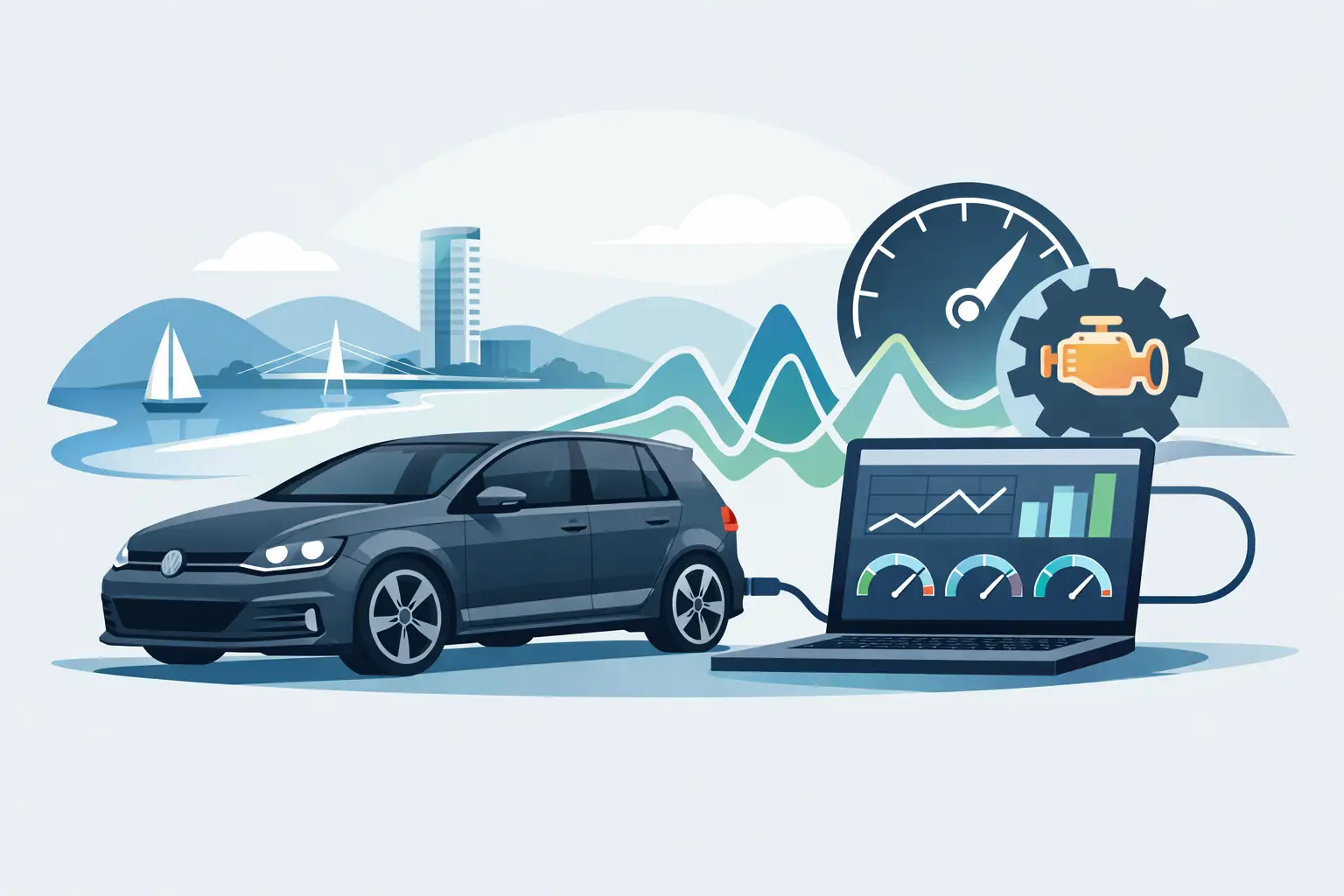
A Golf GTD remap Swansea owners choose should make the car feel stronger where it is used most - pulling through the gears, joining faster roads and overtaking without needing to work the engine hard. The GTD already combines Golf practicality with a capable diesel engine. A well-developed ECU calibration gives that package more urgency, more usable torque and a smoother response from the throttle.
This is not about chasing a headline figure at the expense of the car. The best result is a GTD that feels more complete: quicker to react, easier to drive on part throttle and more confident when loaded with passengers or luggage. For drivers covering regular motorway miles, commuting across South Wales or simply wanting their diesel hot hatch to have more punch, that difference is immediately noticeable.
What a Golf GTD remap changes
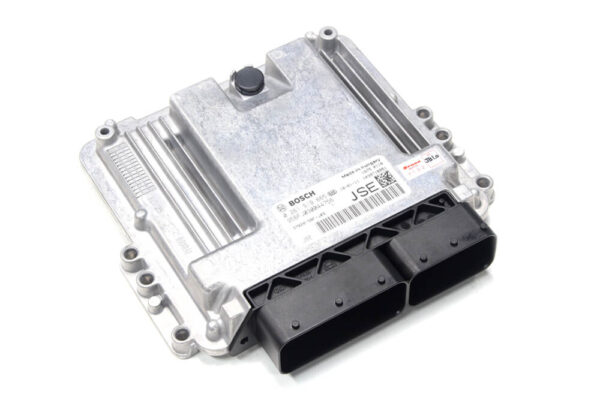
The Golf GTD uses a turbocharged diesel engine controlled by an ECU. From the factory, the software has to work across different markets, climates, fuel quality, service schedules and ownership styles. It also has to sit within a broad safety margin. A performance remap carefully recalibrates the relevant parameters within sensible limits for the vehicle.
That can include torque request, boost control, fuelling, torque limiters and throttle response. These settings must work together. Raising one value in isolation is not a proper tune; it can produce poor drivability, unnecessary smoke, inconsistent power delivery or fault codes.
On a healthy GTD, the most valuable gain is normally torque through the mid-range. The car picks up more cleanly from lower revs and holds its pull more effectively as the gears build. Rather than waiting for a downshift to make progress, the engine has stronger reserve when you ask for it.
The exact outcome depends on the generation of GTD, its condition, fuel quality, transmission and existing modifications. Figures should always be treated as vehicle-specific, but the aim remains the same: a meaningful increase in BHP and torque with controlled, dependable delivery.
Why torque matters more than a peak number
Diesel performance is about usable force. A GTD is rarely driven at maximum revs for long, so a remap needs to improve the area of the power band you use every day. Stronger mid-range torque makes a bigger difference to real road driving than a single impressive figure at the top of the rev range.
You feel it when accelerating from 40 to 70 mph, climbing an incline in a higher gear or carrying a full load. The car needs fewer dramatic downshifts and feels less strained when joining a dual carriageway. On a manual model, this can make the GTD easier to place in the right gear. On a DSG-equipped car, it can make the transmission feel more responsive because there is more available torque before a kickdown is required.
There is a balance to strike. Too much low-rpm torque too aggressively can put unnecessary load through the clutch, dual-mass flywheel, gearbox and drivetrain. A good calibration builds torque in progressively, rather than delivering it as a sudden spike. That is better for traction, smoother for the driver and more sympathetic to the mechanical components.
Manual and DSG Golf GTD models
Transmission type matters when planning a remap. A manual GTD with a tired clutch may reveal clutch slip once torque is increased, even if it seemed acceptable on the standard calibration. That is not caused by poor tuning alone - it can expose wear that was already present.
DSG models have their own considerations. The gearbox control software manages torque intervention, shift behaviour and clutch pressures. Depending on the model and level of tuning, gearbox software may be worth discussing to make sure the engine and transmission are working with compatible torque limits. It is not automatically required for every car, but it should never be ignored.
Is your GTD ready for ECU tuning?
A remap should begin with the vehicle in good mechanical health. ECU software cannot repair a boost leak, worn clutch, failing sensor or blocked intake system. In fact, extra demand can make an existing issue more obvious.
A proper assessment uses diagnostics to check for stored or active fault codes and reviews the vehicle’s general condition before any file is written. Particular attention should be paid to service history, oil quality, turbo operation, coolant behaviour and any signs of drivetrain wear. If the engine is not running correctly as standard, the right move is to diagnose and repair it first.
The diesel emissions system also deserves attention. A GTD used mainly for short journeys may struggle to complete normal DPF regeneration. Frequent warning lights, limp mode, excessive fan running after a journey or a noticeable loss of performance are signs to investigate, not reasons to fit performance software immediately.
For road-going vehicles, emissions-control systems must remain compliant with legal requirements. Specialist DPF, EGR and AdBlue solutions are for off-road use only where applicable. A responsible tuning workshop is clear about that boundary and does not present an off-road-only modification as a shortcut for a road car.
Performance, economy and driving style
Many GTD owners ask whether a remap can improve fuel economy. The honest answer is that it depends on how the car is driven. More torque can allow the engine to make the same progress with less throttle input and fewer downshifts. On steady journeys, particularly motorway runs, some drivers see an improvement in real-world efficiency.
But performance is available to be used. Regular hard acceleration, higher cruising speeds and exploiting the extra torque will consume more fuel. The calibration can improve efficiency potential and drivability, but it cannot override driving style, traffic conditions or short-trip diesel use.
This is why a sensible remap is preferable to an aggressive one. The GTD should retain calm manners in town, clean throttle control in wet conditions and predictable response when manoeuvring. If every small throttle input produces a surge, the tune may feel exciting for five minutes but become tiring in daily use.
What the tuning process should look like
At Swansea Remaps, the focus is on a measured process rather than loading a generic file and hoping for the best. Genuine, up-to-date hardware and software matter because modern Volkswagen engine management systems require accurate reading, writing and diagnostic capability.
The process starts with identifying the vehicle correctly and carrying out pre-tuning checks. The original ECU data is read and retained, allowing the car to be returned to standard software if required. A suitable calibration is then applied for the engine, ECU version and intended use of the vehicle.
After programming, the car should be checked again for fault codes and driven or assessed to confirm that it delivers power cleanly. The important signs are controlled boost, consistent acceleration, no warning lights and no unwanted smoke or hesitation. A remap is only finished when the vehicle behaves as it should.
Supporting maintenance after a remap
The GTD does not need exotic treatment after tuning, but it does benefit from being looked after properly. Use the correct oil specification, service it on time and do not stretch maintenance intervals simply because the car feels strong. Allow the engine to warm through before using full load, then give the turbo a sensible moment to settle after hard driving.
Tyres and brakes matter too. Extra torque can expose poor front-tyre grip, especially in cold or wet conditions. Quality tyres, correct pressures and healthy brakes make the car safer and allow you to enjoy the performance gain properly.
If the car develops a warning light or a change in behaviour after tuning, address it early. Modern diesel systems are highly monitored, and a small fault can develop into a larger issue if ignored. Diagnostics should lead the repair, not guesswork or replacing parts at random.
Is a Golf GTD remap right for you?
A remap makes most sense for an owner who likes the GTD’s blend of practicality and diesel pulling power but wants a sharper, more capable version of the same car. It suits long-distance drivers who want easier overtaking, enthusiasts who want stronger acceleration and everyday motorists who value better response without changing vehicle.
It is less suitable if the car has unresolved mechanical faults, a slipping clutch, neglected servicing or an emissions issue that has not been diagnosed. Sorting the foundations first protects your investment and gives the calibration the best chance of delivering the gains you expect.
The right Golf GTD remap should feel like the car was always capable of more. Keep the vehicle maintained, be realistic about how you drive it, and the result can be a quicker, smoother GTD that remains a pleasure to use every day.
Results, compatibility and suitable options vary by vehicle, software version, mechanical condition and existing modifications. Always confirm the correct route for your own vehicle before work is carried out.