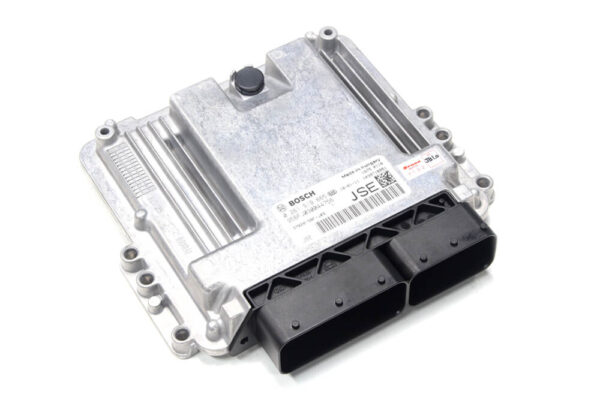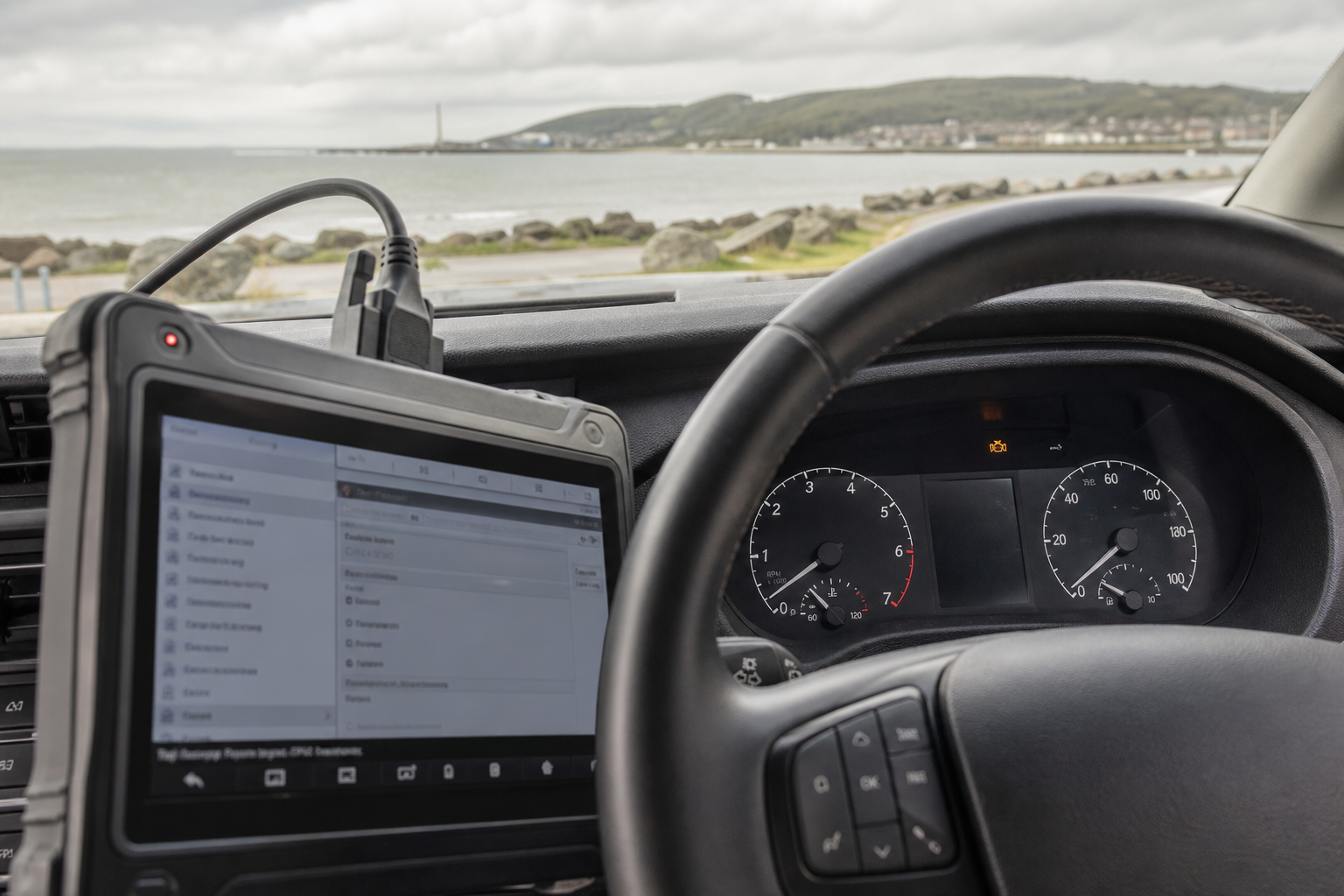
A DPF warning light can come back after regeneration because the regeneration did not complete, soot accumulated again quickly, the ECU received implausible pressure or temperature data, or ash remains inside the filter. Regeneration burns soot; it does not correct every engine fault, remove all ash or prove that the filter and its sensors are healthy.
The sensible next step is diagnosis using fault codes, regeneration information and vehicle-specific live data. Repeated motorway runs, warning-light resets or another forced regeneration can waste time if the underlying problem has not been identified.
A returning DPF light does not automatically mean the filter has failed
A diesel particulate filter captures soot from the exhaust. During regeneration, the vehicle raises exhaust temperature so that accumulated soot can be burned. This is a soot-management process, not simply a dashboard-light reset.
If the light went out and then returned, that alone cannot tell you whether the filter is restricted, a regeneration was interrupted, a sensor signal is inaccurate or the engine is producing soot unusually quickly. It also does not prove that the DPF needs replacing.
For more background on the process, see DPF regeneration and diesel engine health.
First, separate soot, ash and incorrect ECU information
Problems described loosely as a “blocked DPF” can involve three different conditions:
1. Soot loading
Soot is the particulate matter the DPF is designed to capture. A properly controlled regeneration may reduce this loading, provided the required vehicle-specific conditions are met and no relevant fault prevents the process.
2. Ash accumulation
Ash is not the same as soot. Regeneration does not burn all ash away, so it can accumulate inside the filter over time. If ash restriction is significant, another regeneration will not remove the underlying restriction. The filter then needs vehicle-specific assessment to determine whether suitable cleaning, replacement or other manufacturer-directed work is appropriate.
3. Incorrect or incomplete ECU information
The ECU uses inputs including pressure and exhaust-temperature information to assess filter loading and control regeneration. A sensor, connector, wiring fault or pressure-line problem can produce implausible information. The ECU may then report loading incorrectly or prevent regeneration from being controlled properly.
Why the DPF warning light can return after regeneration
| Possible mechanism | What may be happening | What a technician checks | Why another motorway run may not help |
|---|---|---|---|
| Incomplete or interrupted regeneration | The required operating conditions were not maintained, or the ECU stopped the process because of a relevant fault. | Fault codes, freeze-frame information and regeneration status or history where the vehicle makes it available. | A further drive may also fail if an enabling condition is not met. |
| Rapid repeat soot loading | An engine-management, combustion, airflow, boost, EGR, induction or exhaust-system issue may be contributing to unusually fast soot production. | Relevant codes and live data, air-measurement signals and checks for vehicle-specific intake or exhaust faults. | Regeneration treats accumulated soot but does not repair the cause of excessive soot production. |
| Differential-pressure signal problem | The ECU may be receiving an implausible pressure difference across the filter. | Pressure-data plausibility, fault codes, wiring, connector condition and the sensor’s pressure pipes or hoses. | Driving cannot repair a failed sensor, damaged wiring or obstructed or leaking pressure line. |
| Exhaust-temperature signal problem | Incorrect temperature information may interfere with safe regeneration control or saturation assessment. | Stored faults, commanded and reported data where supported, wiring and connector condition, following the manufacturer procedure. | The ECU may be unable to control or verify regeneration correctly while the fault remains. |
| Ash restriction | Soot may have been burned, but non-combustible ash remains inside the filter. | Vehicle-specific loading information, pressure behaviour and an assessment of filter condition. | Regeneration cannot burn accumulated ash away. |
| Induction or exhaust leak | A leak may affect airflow, combustion, emissions or the validity of diagnostic readings. | Inspection of relevant intake and exhaust components, supported by codes and live data. | A drive cycle does not repair a physical leak. |
Stop repeating drive cycles and arrange diagnosis if the DPF warning remains on, returns quickly, appears with other engine or emissions warnings, or the vehicle develops reduced-power behaviour or an urgent or flashing message. Follow the exact instructions in the vehicle handbook because warning logic and permitted driver actions vary by make and model.
1. The regeneration may not have completed
A journey that appears long enough to the driver does not prove that regeneration completed. The ECU controls the process and requires vehicle-specific operating conditions. A relevant stored fault or unsuitable operating conditions may interrupt it or prevent it from starting.
The light may also disappear temporarily without establishing that the original cause has been repaired. A technician should therefore check available regeneration status and history rather than relying only on whether the warning went out.
Some manufacturers provide a driving procedure for an early-stage DPF warning. There is no safe universal speed, engine-speed or journey-duration formula, so use the instructions for the exact vehicle and observe road and traffic conditions. If the warning does not clear as described, or other warning lamps appear, arrange professional assessment.
2. The engine may be creating soot too quickly
The DPF sits downstream of the engine. If combustion or airflow is not being controlled correctly, the filter can load again even after soot has been reduced.
Possible contributors are vehicle-specific but can include faults involving air measurement, EGR operation, boost control, combustion, or induction and exhaust integrity. These are diagnostic possibilities rather than conclusions that can be drawn from the DPF lamp alone.
A useful investigation looks for evidence linking the warning to the wider engine system. That means reading relevant fault codes, examining live data under appropriate conditions and checking for physical defects—not replacing parts because they appear on a generic list.
3. Differential-pressure readings may be wrong
A differential-pressure sensor measures the pressure difference across the DPF. The ECU uses this information when assessing filter loading and managing demand-controlled regeneration.
A high or implausible reading does not automatically prove that the filter is blocked. Diagnosis can include:
- reading stored and pending fault codes;
- checking whether pressure data is plausible for the vehicle and its operating state;
- inspecting the electrical connector and wiring;
- checking associated pressure pipes or hoses for relevant damage, leaks or obstruction;
- comparing the findings with the manufacturer’s procedure.
Universal pressure figures are not reliable because acceptable readings depend on the vehicle, engine operating state, ECU calibration and diagnostic method. See DPF pressure sensor fault versus blocked filter for a closer look at this distinction.
4. Exhaust-temperature data can prevent proper regeneration control
The ECU needs exhaust-temperature information to control regeneration safely. An implausible temperature signal or related electrical fault can interfere with the process, affect saturation assessment and contribute to repeated particulate-filter warnings.
This does not mean an exhaust-temperature sensor is automatically at fault whenever a DPF light returns. The sensor data, stored codes, wiring and connectors need to be assessed using the correct vehicle procedure. Sensor positions and expected readings are not universal.
5. Regeneration burns soot, not ash
This distinction explains why a filter can remain restricted even after a genuine regeneration. Soot can be burned during regeneration, but ash is not completely removed by exhaust flow and can accumulate over time.
If ash is the material causing restriction, another regeneration cannot solve it. Whether cleaning or replacement is suitable depends on the filter’s condition and the vehicle manufacturer’s procedure; neither should be recommended from the warning lamp alone.
What should be checked before another regeneration?
A disciplined DPF investigation should establish why the warning returned before deciding what action is appropriate.
- Assess the warning severity. Record the exact message and note any accompanying engine, glow-plug or emissions warnings and any reduced-power behaviour.
- Read the fault memory. Stored and pending codes, together with freeze-frame information where available, can show the conditions present when a fault was recorded.
- Review regeneration information. Check whether the ECU reports a completed, interrupted, requested or inhibited regeneration where the diagnostic system supports this information.
- Examine pressure data. Assess differential-pressure readings for plausibility under the manufacturer’s specified conditions rather than applying a generic threshold.
- Examine temperature data. Check relevant exhaust-temperature signals and whether the information is credible for the vehicle’s operating state.
- Inspect the supporting components. Check relevant wiring, connectors and pressure lines before condemning the DPF or a sensor.
- Investigate the wider engine system. Relevant airflow, combustion, boost, EGR, induction or exhaust faults may cause rapid soot loading or stop regeneration conditions from being met.
- Choose the next action from the evidence. Only then should further regeneration, repair, a cleaning assessment, replacement assessment or other specialist work be considered.
A forced regeneration is a controlled procedure performed with diagnostic equipment and specified instructions. It is not a DIY process and does not replace diagnosis. Even if it completes, that does not by itself prove that the engine, sensors and filter are healthy.
For an overview of what electronic investigation can establish, visit ECU Diagnostics. If the vehicle has also entered reduced-power mode, read why a car can go into limp mode when accelerating.
Should you try another motorway run?
Only follow a driver regeneration procedure if the exact warning and the vehicle’s handbook direct you to do so. Do not assume that generic online advice about speed, RPM or duration applies to your vehicle.
Further drive attempts are unlikely to address faulty pressure or temperature inputs, damaged wiring, pressure-line problems, ash accumulation, physical leaks or an engine fault causing rapid soot production. If the warning returned after an attempted regeneration, diagnosis is normally more useful than repeating the same attempt.
Do not delete or bypass the DPF
Deleting, gutting or electronically bypassing a manufacturer-fitted DPF is not an appropriate repair. The GOV.UK MOT inspection manual treats missing, obviously modified or tampered-with manufacturer-fitted emissions equipment as a major defect. Government DPF guidance also states that removal is almost always illegal.
The correct approach is to identify whether the issue is soot loading, ash restriction, inaccurate sensor information or another engine or exhaust fault, then pursue a lawful repair or manufacturer-directed remedy.
Mobile DPF diagnostic support in Swansea and surrounding areas
Swansea Remaps provides fully mobile ECU diagnostics and DPF diagnostic support across Swansea, Neath, Port Talbot, Llanelli, Gorseinon, Morriston, Mumbles, Pontarddulais and Ammanford.
The aim is to investigate fault codes and relevant live data so the next step is based on evidence rather than another speculative regeneration or unnecessary parts replacement. This service should not be interpreted as a promise of DPF cleaning, replacement or a particular repair outcome. To discuss the warning displayed by your vehicle, contact Swansea Remaps.
Sources & further reading
External references used to support factual points in this guide.
- MOT inspection manual: cars and passenger vehicles - 8. Nuisance - Guidance - GOV.UK
- www.gov.uk
- www.gov.uk
- www.bury.gov.uk
- nepis.epa.gov
- www.hella.com
- ryco.blob.core.windows.net
- mofler.com
- www.hella.com
- www.hella.com
- www.scribd.com
- m.carcomplaints.com
- static.oemdtc.com
- assets.publishing.service.gov.uk
- www.scribd.com
- www.scribd.com
- epccat.com
- m.carcomplaints.com
- www.reddit.com
- www.reddit.com
Results, compatibility and suitable options vary by vehicle, software version, mechanical condition and existing modifications. Always confirm the correct route for your own vehicle before work is carried out.