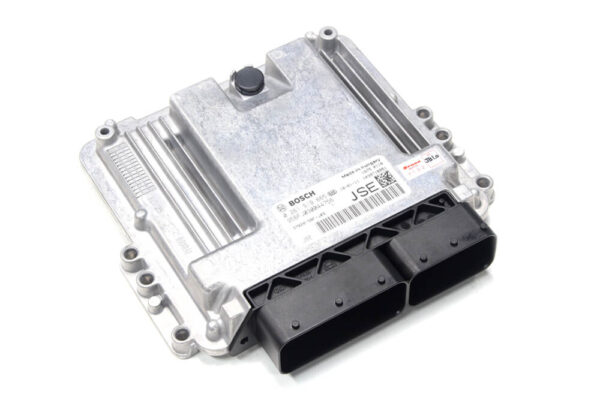
A commercial van power upgrade is not about chasing a headline BHP figure when the van spends its week loaded with tools, stock or equipment. For most working drivers, the real gain is stronger pull from low revs, fewer gearchanges on hills, safer joining of fast roads and a van that feels less strained when it is doing the job it was bought for.
A correctly developed ECU remap can deliver exactly that. It can also support better fuel economy when driven sensibly. But a working van is an asset, not a weekend toy, so the right approach starts with its condition, its workload and the result you actually need.
What a commercial van power upgrade should improve
Modern diesel and petrol vans are heavily controlled by the engine ECU. From the factory, manufacturers must create one calibration that works across multiple markets, fuel qualities, climates, payloads and service conditions. That calibration also needs to leave room for different power variants using much of the same hardware.
Professional remapping adjusts relevant engine management parameters within safe operating limits to make better use of the vehicle's available capability. On a commercial vehicle, torque delivery is often more valuable than maximum power. Extra torque lower in the rev range means the van can move its load with less effort and hold a higher gear where appropriate.
That matters in real driving. A plumber leaving a steep Swansea street with a fully loaded Transit, a courier covering repeated stop-start runs, or a landscaper towing equipment does not need to rev the engine hard to feel a benefit. They need controlled, usable response from the point they pull away.
A good calibration should improve:
- low and mid-range pulling power
- throttle response without making the pedal overly sharp
- overtaking confidence when the vehicle is loaded
- hill-climbing ability and towing drivability
- the ability to make progress in fewer unnecessary gearchanges
The best result feels factory-like, just stronger. If a van suddenly becomes jerky, smoky or difficult to modulate at low speed, that is not a sign of a quality power upgrade.
Power is only useful when it matches the job
The same model of van can have completely different demands depending on how it earns its keep. A light-load motorway van may benefit most from smoother cruising torque and an economy-led calibration. A vehicle that regularly carries heavy loads may need a more measured torque strategy to respect its clutch, gearbox and drivetrain. A towing vehicle needs predictable delivery rather than a large surge of power in one narrow part of the rev range.
This is why generic files and exaggerated claims are a poor fit for commercial use. A remap should be selected around the engine, transmission, mileage, maintenance history and intended use. The advertised gain is only part of the picture.
Manual vans deserve particular care. Extra torque can expose an existing weak clutch, especially where the vehicle has already covered high mileage or spends its life in traffic. On automatic vans, torque limits and gearbox behaviour need to be considered alongside the engine calibration. More is not always better if it creates unnecessary stress or makes the vehicle less consistent under load.
Think about the vehicle at working weight
A van that feels quick while empty can feel entirely different with racking, tools, materials or a trailer behind it. Be clear with the tuning specialist about the normal payload and whether the vehicle tows. This allows the calibration to be built around useful delivery, not a short empty-road test drive.
It also makes sense to be realistic about tyres, brakes and servicing. Better acceleration does not remove the need for proper stopping distances, suitable tyres and sound mechanical condition. The engine may be capable of more, but the whole vehicle still has to work as one system.
Checks to make before remapping a working van
An ECU remap does not repair mechanical faults. In fact, asking for more from an engine with unresolved issues can make the underlying problem more obvious. A professional commercial van power upgrade begins with diagnostics, not a laptop plugged in on a driveway and a file loaded in minutes.
Before tuning, the vehicle should be assessed for stored fault codes, boost leaks, injector concerns, fuelling issues, air-flow problems and poor battery voltage. The health of the turbocharger, intake system and cooling system matters too. A split boost hose may be a relatively simple fix, but no remap can compensate for air escaping before it reaches the engine.
DPF health deserves special attention on diesel vans. Short runs, repeated idling and interrupted regeneration cycles are common in trade use. If the DPF is loaded, the pressure readings are abnormal or regeneration is not completing properly, the cause should be identified before any performance work is carried out. The same applies to EGR and AdBlue-related faults. Diagnose the fault properly rather than assuming every warning light requires a tuning solution.
There are specialist emissions-system modifications intended solely for off-road use. These are not a substitute for maintaining a road-going van lawfully, and operators should understand their legal, MOT, insurance and manufacturer warranty responsibilities before making any modification.
Maintenance first, then performance
A van with overdue servicing is not ready for extra demand. Correct oil specification, clean filters, healthy fluids and timely belt or chain maintenance are basic protection for an engine that works hard for a living. If the clutch is already slipping, the turbo is noisy or warning lights are active, resolve those issues first.
This is not about making the process difficult. It is about avoiding downtime. The commercial benefit of a well-planned remap disappears quickly if the vehicle is off the road because an existing fault was ignored.
Can a power upgrade improve fuel economy?
It can, but it depends on how the vehicle is driven and how it is used. Better low-down torque can mean fewer revs, fewer downshifts and less throttle input to maintain speed. On longer journeys and steady runs, that can support a worthwhile improvement in fuel consumption.
The opposite is also true. If the driver uses the extra performance at every opportunity, fuel use can rise. A van that is constantly driven flat-out, overloaded beyond its limits or used on short cold journeys will not suddenly become economical because it has been remapped.
For fleet users, the most meaningful measure is not one optimistic journey after tuning. Compare fuel use over several weeks, using similar routes, loads and driving patterns. Also look at productivity. If the driver can maintain speed more easily when loaded, spend less time changing gear and complete journeys with less engine strain, that has value beyond the number shown at the pump.
Choosing the right tuning approach
There is a major difference between a carefully produced calibration and a one-size-fits-all file. The right provider should use current genuine diagnostic and programming equipment, read the vehicle correctly, check its condition and retain the original software. They should also be willing to discuss what is realistic for your specific engine rather than promising the same result for every van.
Ask practical questions. Is the tune intended for towing or heavy payloads? Has the clutch condition been considered? Are fault codes and live data checked first? Will the torque curve be smooth enough for city driving? Is there aftercare if a pre-existing fault becomes apparent?
At Swansea Remaps, the focus is on measurable, usable gains supported by workshop diagnostics and up-to-date tuning equipment. That matters when the vehicle is part of your livelihood and needs to return to work performing properly.
Insurance is another point not to overlook. A remap is a vehicle modification, so inform your insurer and make sure the policy remains suitable for business use. If the van is leased, financed or covered by a manufacturer warranty, check the relevant agreement as well. Being upfront is easier than dealing with a rejected claim later.
The sensible way to get more from your van
A commercial van power upgrade works best when it is treated as part of a maintenance and operating plan. Start with a healthy vehicle, identify whether you need towing strength, loaded drivability, motorway economy or a combination of these, then choose a calibration that respects the limits of the drivetrain.
The aim is simple: a van that pulls harder when it is carrying its real workload, feels calmer on the road and costs less effort to drive all day. Get the basics right before tuning, and the improvement can be felt every time the vehicle leaves site.
Results, compatibility and suitable options vary by vehicle, software version, mechanical condition and existing modifications. Always confirm the correct route for your own vehicle before work is carried out.