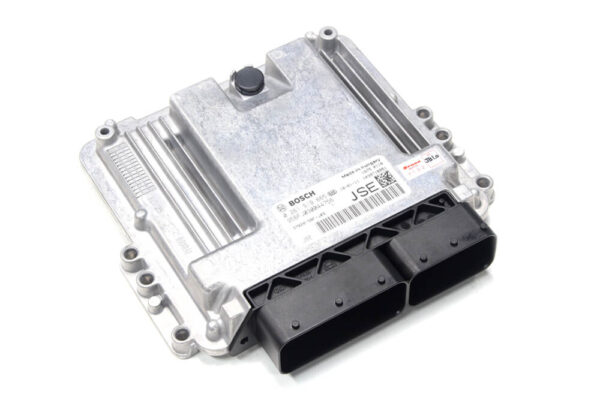
Yes, a high-mileage car can sometimes be remapped. Mileage on its own is not a reliable pass-or-fail test. A well-maintained vehicle with 140,000 miles may be a better candidate than a poorly serviced one with 70,000 miles.
The sensible question is not “is the mileage too high?” but “what condition is the vehicle in now?” A Stage 1 remap changes the ECU calibration to alter the way the engine delivers its available performance. It does not renew a worn clutch, cure low compression, repair a boost leak or make an ageing turbocharger healthy again. If there is an underlying problem, the additional torque or load can make it more noticeable.
For that reason, high-mileage remapping should be condition-led. A proper pre-remap discussion and diagnostic assessment can identify whether a vehicle is a sensible candidate, whether repairs should come first, or whether leaving it standard is the better decision.
There is no universal mileage limit for a Stage 1 remap
There is no single odometer reading at which a car becomes unsuitable for remapping. Engines and drivetrains age differently according to their design, servicing, driving pattern, previous repairs and how they have been treated under load.
A regularly serviced motorway car or van may have covered a high number of relatively easy miles. By contrast, a lower-mileage vehicle that has spent its life on short journeys, towing, carrying heavy loads, missing oil changes or being driven with warning lights on can have more wear than its mileage suggests.
That does not mean a high-mileage vehicle is risk-free. It means the decision should be based on evidence: its maintenance record, live diagnostic information, stored fault codes, road behaviour and the condition of key mechanical components.
What should be checked before remapping a high-mileage car?
1. Service history and the correct basic maintenance
Start with the unglamorous essentials. Check whether oil and filter changes have been carried out at sensible intervals using the correct specification, and whether the air filter, fuel filter, spark plugs on petrol engines and manufacturer-scheduled belt or chain work have been properly addressed.
Ask practical questions:
- Is there evidence of regular servicing, rather than just a stamped book with gaps?
- Has the engine recently been run low on oil or coolant?
- Are there overdue timing-belt, wet-belt or auxiliary-belt jobs?
- Has the vehicle had repeated injector, turbocharger, DPF, EGR or AdBlue/SCR warnings?
- Has it recently had major work that still needs proving on the road?
Service history cannot guarantee mechanical health, but it provides vital context. A remap is best considered after routine maintenance is current, not instead of it.
2. Diagnostic scan and warning-light history
A vehicle with an engine management light, reduced-power mode or unresolved fault codes should not be treated as a straightforward remap candidate. Even when the dashboard is clear, stored or pending codes can point to intermittent faults that need investigation.
The diagnostic process should consider relevant fault codes and live data rather than relying only on a generic code reader. Depending on the vehicle, this may include requested versus actual boost pressure, airflow readings, fuel-pressure behaviour, coolant temperature, intake temperature and the operation of sensors that influence fuelling and boost control.
Fault codes are clues, not automatic diagnoses. Clearing a code without finding its cause is not a repair. If a fault is present, deal with the underlying issue first. Swansea Remaps offers ECU diagnostics to support a condition-led decision before tuning.
3. Clutch, dual-mass flywheel and gearbox condition
On a manual vehicle, extra torque can expose a clutch or dual-mass flywheel that is already close to its limit. Common concerns include clutch slip under strong acceleration in a higher gear, a rising engine speed without matching road speed, vibration through the pedal or transmission shudder. These symptoms need mechanical assessment; they are not something software should be expected to hide.
Automatic and DSG-style transmissions also need attention. Harsh shifts, flaring between gears, delayed engagement, shunting, transmission warnings or missed servicing are reasons to pause and investigate. The engine may be capable of more torque, but the whole driveline has to manage it reliably.
For working vans, this matters especially where the vehicle regularly carries tools, payload or towing load. The useful outcome is controlled, usable driveability, not simply asking an ageing drivetrain to do more than its condition supports. Read more about how remapping can help towing performance and the checks that should sit around it.
4. Turbocharger, boost system and air leaks
Turbocharged engines depend on sound air control. A split boost hose, loose intercooler connection, sticking actuator, tired vacuum control component or worn turbo can all cause poor performance and fault codes. A remap will not repair those faults.
Signs worth investigating include:
- Loss of power, especially under acceleration;
- Hissing or whooshing noises that were not previously present;
- Excessive smoke from the exhaust;
- Repeated underboost or overboost faults;
- Oil contamination around boost pipes beyond what is considered normal for the engine; and
- New or excessive turbo noise.
A healthy-looking car can still have a boost leak that only appears when the engine is under load. That is why a vehicle that feels flat should be diagnosed rather than remapped in the hope that it will become stronger. Our guide to boost leak diagnosis explains why lost power needs a cause, not a guess.
5. Oil consumption, coolant loss and engine health
Before considering any tuning, be honest about oil and coolant use. A vehicle that needs frequent top-ups, leaves oil smoke, pressurises its cooling system, overheats, misfires or has unexplained contamination needs mechanical investigation first.
High oil consumption may be linked to several issues, including external leaks, turbocharger problems, valve-stem seals, piston-ring wear or crankcase-breather faults. The exact cause depends on the engine. Likewise, coolant loss can come from a simple external leak or a more serious fault. It is not responsible to diagnose either remotely from one symptom.
Where the history or symptoms justify it, an independent garage may recommend further mechanical testing. The right answer may be repair first, a conservative decision not to tune, or simply continued standard use.
6. Fuel system, ignition and everyday running quality
A high-mileage petrol engine should run cleanly without persistent misfires, hesitation or unexplained knock-related faults. A diesel should start and idle consistently, pull cleanly and not have unresolved fuel-pressure, injector-correction or combustion-related warnings.
Do not dismiss a rough idle, difficult starting, smoke or a recurring management light as “normal for its age”. These are reasons to establish the cause before any calibration change. A good remap starts with a vehicle that is fundamentally working as intended.
7. DPF, EGR and AdBlue/SCR faults must be dealt with lawfully
On modern diesels, emissions-system health is part of overall vehicle health. A blocked DPF, recurring EGR fault or AdBlue/SCR warning can affect performance, fuel use and reliability. These systems should be assessed and repaired or regenerated where appropriate, using a lawful route for a public-road vehicle.
The current DVSA MOT inspection manual says that manufacturer-fitted emissions-control equipment that is missing, obviously modified or obviously defective is a major defect. It also lists evidence of DPF tampering as a major defect. Read the current GOV.UK MOT guidance.
If a diesel has a DPF warning or poor regeneration history, resolve that concern before discussing a remap. Swansea Remaps can provide DPF diagnostic support, but diagnosis is not a substitute for the correct repair where a component fault is found.
When a high-mileage car may be a reasonable candidate
A Stage 1 remap may be worth considering when the vehicle has been maintained, has no unresolved fault codes or warning lights, runs consistently under load, has no concerning oil or coolant use, and its clutch, gearbox and boost system are behaving correctly.
It is also important to have realistic expectations. A carefully chosen Stage 1 calibration may improve the way a healthy engine responds and delivers torque, but it does not turn an older vehicle into a new one. The owner still needs to maintain it properly, allow it to warm up before heavy use and address new symptoms promptly.
When the answer should be “not yet”
Postpone remapping if the vehicle has a current engine or transmission warning, clutch slip, unexplained smoke, active limp mode, overheating, significant oil or coolant loss, irregular boost behaviour, a known gearbox issue or overdue essential maintenance.
That is not a rejection based on mileage. It is a sensible order of work: establish a reliable mechanical baseline, repair the problem, then reassess suitability. In some cases, the most valuable result of the pre-remap process is identifying an issue before it becomes more expensive.
High-mileage remapping: the practical conclusion
High mileage alone does not prevent a Stage 1 remap. Condition, maintenance and diagnostics matter far more than the number on the dashboard. A healthy, well-serviced high-mileage car can be a more sensible candidate than a neglected low-mileage example; equally, no remap should be used to mask mechanical wear or existing faults.
If you are in Swansea or the surrounding South Wales areas and are considering a mobile Stage 1 remap, start by checking the vehicle’s suitability rather than assuming it will be right or wrong because of its mileage. You can use the Vehicle Lookup for an initial vehicle-based view, then contact Swansea Remaps to discuss the vehicle’s condition, history and intended use.
Sources & further reading
External references used to support factual points in this guide.
Results, compatibility and suitable options vary by vehicle, software version, mechanical condition and existing modifications. Always confirm the correct route for your own vehicle before work is carried out.