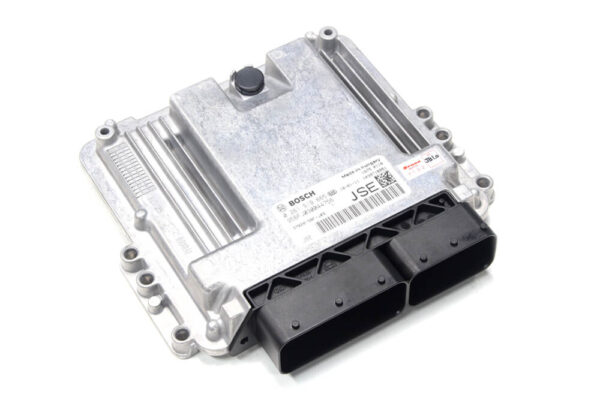
CAN-Phantom can help protect against relay theft by adding a separate PIN-based immobilisation step before the vehicle can be started and driven. In the relay-theft scenario, this means a thief may be able to make the car believe the key is nearby, but that factory key authorisation alone may not satisfy the additional PIN requirement.
That is the intended security benefit, rather than a promise that any vehicle is theft-proof. CAN-Phantom is an aftermarket system and its suitability depends on the particular vehicle, its configuration and the quality of installation. It should sit within a wider security plan that includes protecting keys, checking manufacturer updates and using visible physical deterrents where appropriate.
What is relay theft?
Relay theft, sometimes called a relay attack, is associated mainly with vehicles that use passive keyless entry and start. At a high level, criminals use equipment to make the vehicle believe its smart key is close by when it is actually elsewhere, such as inside the owner’s home. This can potentially allow the vehicle to unlock and start without the physical key being present.
Not every keyless vehicle has the same design or level of exposure. Security can vary between makes, models, years, key systems and software versions. Avoid assuming that a vehicle is at risk, or protected, purely because it has keyless entry; check the handbook and manufacturer guidance for the vehicle in question.
Police guidance recommends keeping keys away from doors and windows, considering tested signal-blocking storage and checking whether the key fob has a switch-off or sleep function. Warwickshire Police’s keyless vehicle theft guidance explains these sensible first layers without treating them as a complete answer to vehicle security.
Where CAN-Phantom is intended to help
The key question is not simply, “Can a relay attack unlock my car?” It is: if the factory key authorisation is defeated, what separate barrier remains before the vehicle can be driven?
According to the manufacturer, CAN-Phantom is a retrofitted CAN-bus immobiliser that uses a personalised PIN sequence entered through existing vehicle controls. The manufacturer states that the vehicle should not start until that sequence has been entered.
In simple terms, the security chain looks like this:
- The factory keyless system decides whether a key is present.
- A relay attack is intended to interfere with that proximity decision.
- A PIN-based immobiliser is intended to add another drive-authorisation decision.
So, where the system is compatible and correctly configured, a relayed key signal may not by itself be enough to start and drive the vehicle. This is why an independently added immobiliser can be useful even on a vehicle with factory-fitted keyless security.
CAN-Phantom says its unit can be concealed within the vehicle wiring loom and that its interface supports functions such as changing the PIN and enabling valet mode. Concealment may add to the difficulty of a targeted attack, but it should not be confused with a claim that the device is undetectable or impossible to bypass.
For an overview of the service, see CAN-Phantom installation from Swansea Remaps.
What a CAN-Phantom immobiliser does not guarantee
An immobiliser is one layer of protection, not a guarantee against every theft method. The available evidence does not include an independent laboratory test or police dataset that quantifies CAN-Phantom’s effectiveness specifically against relay theft.
It would therefore be wrong to say that it will stop every relay attack or protect every vehicle from all forms of theft. No single product should be assumed to cover every possible route, including other key-related attacks, attacks on vehicle electronics, physical damage, theft by recovery vehicle or theft of components.
A more realistic conclusion is that a PIN immobiliser is intended to add a separate hurdle before a vehicle can be driven. That can be valuable, but it works best as part of layered security and after vehicle-specific compatibility has been confirmed.
Which protection layer addresses which problem?
Security products are not interchangeable. Each addresses a different part of the theft risk, and their limitations matter.
| Measure | Primary purpose | What it may help with | Important limitation |
|---|---|---|---|
| PIN-based CAN immobiliser | Add a separate authorisation step before starting | Can help prevent the vehicle being driven when factory keyless authorisation has been defeated | Compatibility, configuration and installation matter; it is not proof of protection against every theft method |
| Tested signal-blocking pouch | Reduce the chance of the key signal being relayed from storage | Relay-theft risk associated with keyless fobs | Must be tested regularly, including with spare keys; not every pouch or container performs reliably |
| Fob sleep or switch-off function | Stop or reduce key transmission when not in use | Keyless relay risk where the vehicle supports the feature | Availability and operation are manufacturer- and model-specific |
| Manufacturer software or fob update | Maintain the vehicle’s original security systems | Known issues addressed by a manufacturer where an update is available | Updates vary by vehicle and do not make an individual vehicle theft-proof |
| Steering-wheel lock or secure garage | Add visible deterrence and delay | Making opportunist theft less straightforward | Does not replace key protection or an immobilisation layer |
| Tracking system | Support location or recovery after theft, depending on the system and circumstances | Post-theft response | It does not prevent entry, starting or driving away |
For a practical comparison of two very different layers, read CAN-Phantom vs a steering lock.
Compatibility and installation: questions worth asking first
Do not assume an immobiliser that suits one car or van automatically suits another. Make, model, year, powertrain, electronic network architecture, software version and installation method can all affect what is appropriate.
Before booking, ask for confirmation of support for your exact vehicle. You should also establish what instructions will be provided for everyday use, servicing, roadside recovery and any future change of vehicle ownership. The manufacturer says CAN-Phantom installation is undertaken by approved installers, but owners should verify the relevant installer’s status directly rather than assume it.
Useful questions include:
- Is my exact vehicle, including its year and powertrain, supported?
- What will I need to know to use the system day to day?
- How is valet mode managed when the vehicle is handed to a garage or valet service?
- What information should I provide to a recovery operator if the vehicle cannot be started normally?
- What documented process applies if I forget the PIN or sell the vehicle?
- What aftercare information will I receive after fitting?
Our guide to questions to ask before booking a CAN-Phantom installation can help structure that conversation.
Owner checklist before and after fitting
- Protect both keys: store main and spare keys away from external doors and windows.
- Test any signal-blocking pouch: check that the vehicle cannot detect the key while it is inside, and repeat the check periodically. Test spare-key storage too.
- Check the handbook: find out whether the fob has a sleep, motion-sensor or switch-off function and use it as instructed by the manufacturer.
- Ask about updates: contact the manufacturer or dealer to check whether security-related vehicle or key-fob updates are available for your exact vehicle.
- Keep the PIN private: do not leave it in the vehicle, share it unnecessarily or use an obvious sequence linked to you.
- Plan service handovers: understand valet mode before leaving the vehicle with a workshop, valet service or other third party.
- Add physical delay: a visible steering-wheel lock, controlled parking or a garage can complement electronic protection.
- Retain fitting information: keep installation and operating documentation in a safe place away from the vehicle.
Insurance, warranty and certification: check rather than assume
Before fitting any aftermarket security device, check your insurer’s requirements and tell it about the modification if the policy requires disclosure. Do not assume an immobiliser will reduce premiums, be accepted by every insurer or meet a specific policy condition.
It is also important to separate product testing from insurer recognition. Thatcham Security Certification is a testing and verification programme, but Thatcham explains that insurer recognition is a separate matter. No claim should be made that CAN-Phantom is Thatcham-certified, insurer-approved or premium-reducing unless the product documentation and the relevant insurer confirm it for the current policy.
Similarly, ask the vehicle manufacturer or warranty provider for written guidance if warranty implications are important to your decision. Do not rely on general assurances about aftermarket electronics.
Keep manufacturer security up to date
Software is now part of vehicle security. The UK Vehicle Certification Agency notes that software updates are relevant to continued vehicle cybersecurity and safety. Manufacturers may issue updates or offer key-fob changes for particular vehicles, but availability and effect are specific to the make and model.
Updating factory security and adding an aftermarket immobiliser are not opposing choices. A sensible approach is to maintain the vehicle’s original security measures, protect the keys and then consider whether an independent drive-authorisation barrier is appropriate for the vehicle and how it is used.
Can Swansea Remaps help?
Swansea Remaps offers fully mobile CAN-Phantom installation in Swansea and surrounding areas including Neath, Port Talbot, Llanelli, Gorseinon, Morriston, Mumbles, Pontarddulais and Ammanford. Vehicle-specific compatibility should be confirmed before booking, along with installer status, insurance requirements and the support you need for servicing or recovery.
To discuss your vehicle, use the Swansea Remaps contact page.
Sources and further reading
- Warwickshire Police: keyless vehicle theft guidance
- Thatcham Research: increasing car security
- CAN-Phantom: manufacturer product information
- Vehicle Certification Agency: cybersecurity and software updating
- GOV.UK: vehicle cybersecurity and software-update requirements
Sources & further reading
External references used to support factual points in this guide.
- www.vehicle-certification-agency.gov.uk
- www.gov.uk
- www.warwickshire.police.uk
- www.warwickshire.police.uk
- www.gov.uk
- www.thatcham.org
- www.gov.uk
- www.herts.police.uk
- assets.publishing.service.gov.uk
- assets.college.police.uk
- www.psni.police.uk
- www.vehicle-certification-agency.gov.uk
- www.warwickshire.police.uk
- news.thatcham.org
- www.ncsc.gov.uk
- www.westyorkshire.police.uk
- www.gmp.police.uk
- news.thatcham.org
- About
- Can Phantom Immobiliser
Results, compatibility and suitable options vary by vehicle, software version, mechanical condition and existing modifications. Always confirm the correct route for your own vehicle before work is carried out.